


Have you ever heard the piercing sound of a Mallorcan bagpipe resonating among the olive trees of the Serra de Tramuntana? Traditional Mallorcan music is much more than folklore: it is the living voice of an island that has kept its roots with extraordinary fidelity. From village square dances to Gregorian chants on Christmas Eve, Mallorca’s musical heritage invites those who discover it to understand the island from within, with all their senses.
Article contents
- A musical heritage with centuries of history
- Traditional instruments: the sound of the island
- Folk dances: body, rhythm and identity
- Gloses and glosadors: the improvised word
- La Sibil·la: the chant that UNESCO protects
- Folk music festivals: the calendar of living tradition
- Festival calendar: when and where to experience the tradition
- Where to learn: workshops and schools
- How to experience traditional Mallorcan music today
- Passing on the heritage: between school and the village square
- Music, land and oil: the soul of Mallorca
Contenidos / Contents
- A musical heritage with centuries of history
- Traditional instruments: the sound of the island
- Folk dances: body, rhythm and identity
- Gloses and glosadors: the improvised word
- La Sibil·la: the chant that UNESCO protects
- Folk music festivals: the calendar of living tradition
- Festival calendar: when and where to experience the tradition
- Where to learn: workshops and schools
- How to experience traditional Mallorcan music today
- Passing on the heritage: between school and the village square
- Music, land and oil: the soul of Mallorca
- Frequently asked questions
- Sources
Contenidos / Contents
A musical heritage with centuries of history
The musical tradition of Mallorca has its roots in the Middle Ages and has accumulated influences over the centuries: the Catalan heritage brought by the conquest of Jaume I, the Arab echoes of the Andalusian period, and the Mediterranean currents that have always crossed the island. The result is a singular musical corpus, with genres, instruments and rituals that exist nowhere else in the world in exactly the same form. Traditional Mallorcan music is, in that sense, a unique and unrepeatable heritage.
What is fascinating about this tradition is its capacity for survival. Musicologists such as Baltasar Samper spent decades collecting songs and melodies between 1924 and 1932, and their archives — preserved at the abbey of Montserrat — are today an essential source for the study of traditional Mallorcan music. Mallorcan folklore also has archives of enormous value outside the island, including that compiled by Alan Lomax in 1952, preserved at the Library of Congress of the United States.
Ethnomusicology has recognised Mallorca as an exceptional laboratory: an island that, due to its insular condition and its strong linguistic and cultural identity, has preserved musical forms that disappeared on the mainland centuries ago. The cant de l’Argument, agricultural work songs and Lenten tunes are just some of the genres that complete the sonic map of traditional Mallorcan music, a richness that is difficult to take in during a single visit.
At Finca Treurer, nestled in the agricultural heart of the island, traditional Mallorcan music forms part of the cultural landscape that surrounds every visit. Hearing the xeremies during a festa local, with the aroma of Treurer extra virgin olive oil filling the air, is an experience that connects the visitor with the most genuine Mallorca.
Traditional instruments: the sound of the island
No approach to traditional Mallorcan music is complete without getting to know the instruments that give it body and character. Some are unique to the Balearic Islands; others share a family with instruments from across the Mediterranean basin, though with an unmistakable personality that places them at the centre of Balearic folklore.
The xeremies: the Mallorcan bagpipe
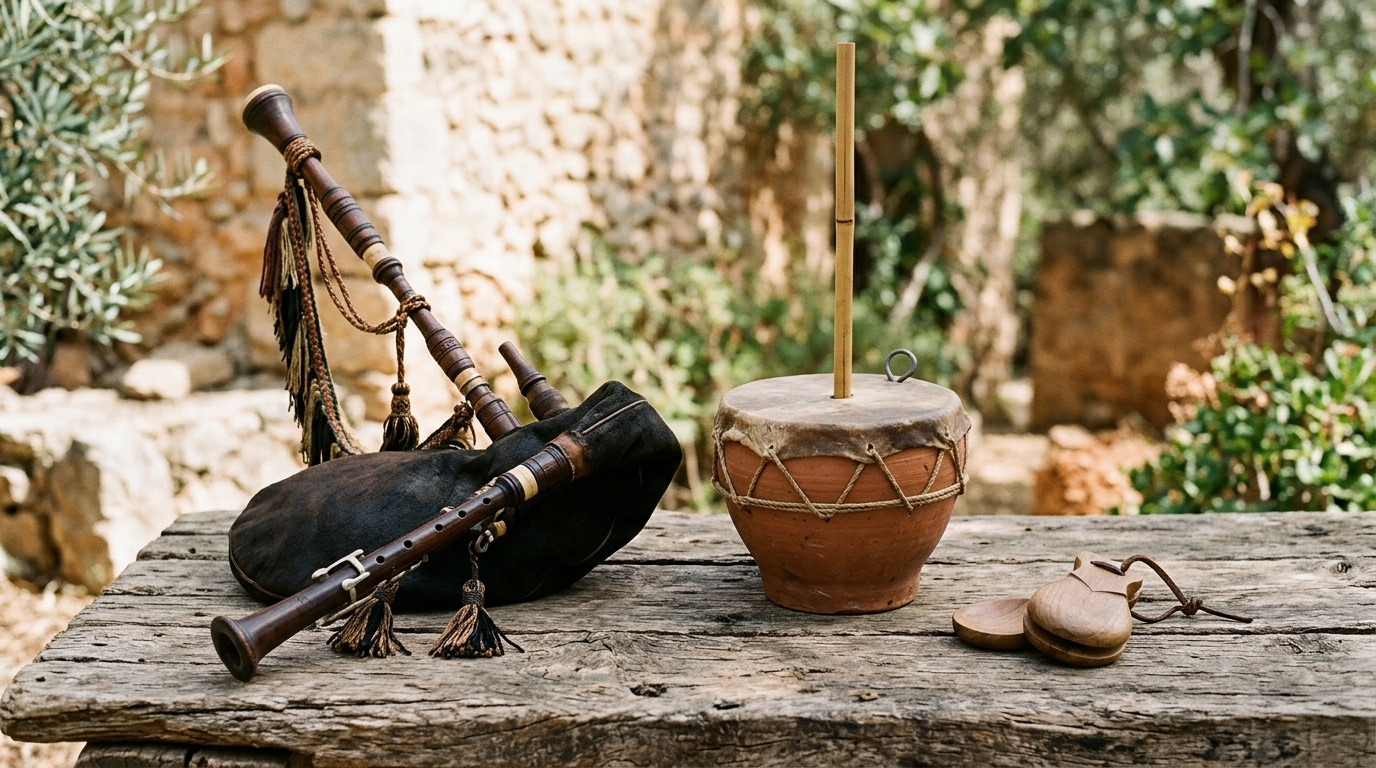
The xeremies are the most iconic instrument of Mallorcan folk music. This bagpipe accumulates air in a leather bag and distributes it through the «grall» — the melodic pipe — and the «braguer», which directs the air towards the bass drone. It is believed to have arrived on the island with Catalan settlers in the 14th century. If you want to hear them before travelling, this video from the Escola Municipal de Mallorquí shows the xeremies, the tamborí and the fabiol in action within the context of traditional Mallorcan music.
The xeremies are usually played together with the flabiol and the drum or tamborí, forming what is known as a mitja cobla. The chanter and drones are often made from almond wood, a detail that connects the instrument with the island’s agricultural landscape and with the deepest identity of traditional Mallorcan music.
The ximbomba: percussion and festivity
If the xeremies are the melodic voice of the tradition, the ximbomba is its festive pulse. It is a membranophone built on a container with a hole in the base, whose main curiosity is that to play it correctly you need water: you must keep your hand moist to rub the reed that vibrates against the skin. The ximbomba is one of the most characteristic instruments of traditional Mallorcan music and its sound is immediately recognisable.
The ximbomba is especially associated with the feast of Sant Antoni, celebrated on 17 January at various points across the island, although its best-known connection is with Sa Pobla. The gloses and most of the songs of the Sant Antoni carnival are accompanied only by a ximbomba. Hearing it on a January night, with bonfires burning and the smell of botifarró in the air, is one of those experiences you never forget.
Bandúrria, llaüt and guitar: Mallorcan strings
The repertoire of string instruments in traditional Mallorcan music is equally rich. The bandúrria is a chordophone with an egg-shaped resonating body, a short fretted neck and six double strings plucked with a plectrum. The llaüt is similar but has a larger body, giving it a deeper sound. Together with the guitar, these three instruments form the harmonic backbone of the ball de bot and many other popular dances of traditional Mallorcan music.
Folk dances: body, rhythm and identity
Mallorcan folk dances are inseparable from the traditional Mallorcan music that accompanies them. Each dance has its own character, its tempo, its history and its place in the festive calendar.
The ball de bot: everyone’s dance
The ball de bot is the generic term that groups together various traditional dances of the Illes Balears, such as the jota, the fandango, the mateixa and the bolero. Its name — literally «jump dance» — evokes the energy and joy it radiates when performed in a village square. It is, without doubt, the most visible expression of traditional Mallorcan music in public spaces.
The ball de bot is accompanied by the quintessential traditional Mallorcan instruments: the xeremia, the tamborí and the fabiol. The dancers wear traditional costumes, and the combination of music, movement and dress creates a spectacle of an authenticity that is hard to find elsewhere in the Mediterranean. Those who attend a ball de bot for the first time immediately understand why traditional Mallorcan music creates such a deep bond with the island’s identity.
The Mallorcan bolero: elegance and distinction
The bolero is the most famous of the Mallorcan dances, also danced in Menorca, and is musically characterised by the subdivision of the third bar into two. Its style is distinguished and elegant, accompanied by guitars, violins, castanets and triangle. It is not a dance of exuberance, but of restraint and precision: every gesture counts. The bolero is one of the jewels of traditional Mallorcan music that has transcended borders most widely.
Some boleros are called parado — «stopped» — because they end unexpectedly. Historical archives preserve scores of the famous Parado de Valldemossa, which remains one of the most recognisable pieces of Balearic folklore.
The mateixa: the dance that unites generations
The mateixa is a dance deeply rooted in the Illes Balears whose origins date back to the late 17th century, and it can be seen at both public and private events. The Mallorcan word «mateixa» means «the same», and it was so popular that the expression «tirar o pedir mateixes» was synonymous with asking for a dance. Its continued presence in contemporary celebrations demonstrates that tradition is not at odds with vitality, and that traditional Mallorcan music knows how to renew itself without losing its essence.
The ball des cossiers: rite and symbol
The ball des cossiers is probably the most popular traditional dance in Mallorca. It is believed to have been brought from Catalonia in the 13th or 14th century. Unlike the ball de bot, which is a dance of collective participation, the cossiers is a ritual dance performed by a fixed group of dancers with very clearly defined symbolic roles. It is performed at festes patronals in several municipalities and its staging combines music, theatricality and collective memory in a unique way, placing it among the oldest expressions of traditional Mallorcan music.
Gloses and glosadors: the improvised word
There is a genre of Mallorcan oral tradition that does not resound on the stages of major festivals, but in village squares, at Sant Antoni celebrations and at gatherings of enthusiasts: the gloses. These are improvised stanzas that glosadors — popular oral poets — compose and sing on the spot, combining wit, memory and verbal dexterity in a form of art that ethnomusicology recognises as one of the pillars of Balearic intangible heritage and of traditional Mallorcan music in its most literary dimension.
A glosador is a popular versifier who improvises his songs — «gloses» — and recites or sings them with a characteristic tune. The Mallorcan glosa is sung without instrumental accompaniment, with a melody that each glosador has made his own. The stanza has a minimum of four heptasyllabic lines and two single rhymes combined freely. Mallorcan glosadors are, together with the Basque bertsolaris, the only ones in the world who improvise without any musical accompaniment — except at Sant Antoni celebrations, where the ximbomba marks the rhythm.
The most spectacular format is the combat de picat: the contests take place between two, three, four or five glosadors, can last for hours, and improvisation covers any topic. In the 1990s, the philologist Felip Munar undertook the task of revitalising the art of improvised singing in Mallorca, drawing on the testimony of a small group of veteran glosadors who had survived the censorship of the Franco era. Today, glosadors such as Mateu Matas «Xurí» keep this tradition alive with a reach that goes far beyond the island. If you want to experience it first-hand, the Sant Antoni celebrations in Sa Pobla and Manacor are the most authentic setting in which to hear gloses in their original context, within the rich universe of traditional Mallorcan music.
La Sibil·la: the chant that UNESCO protects
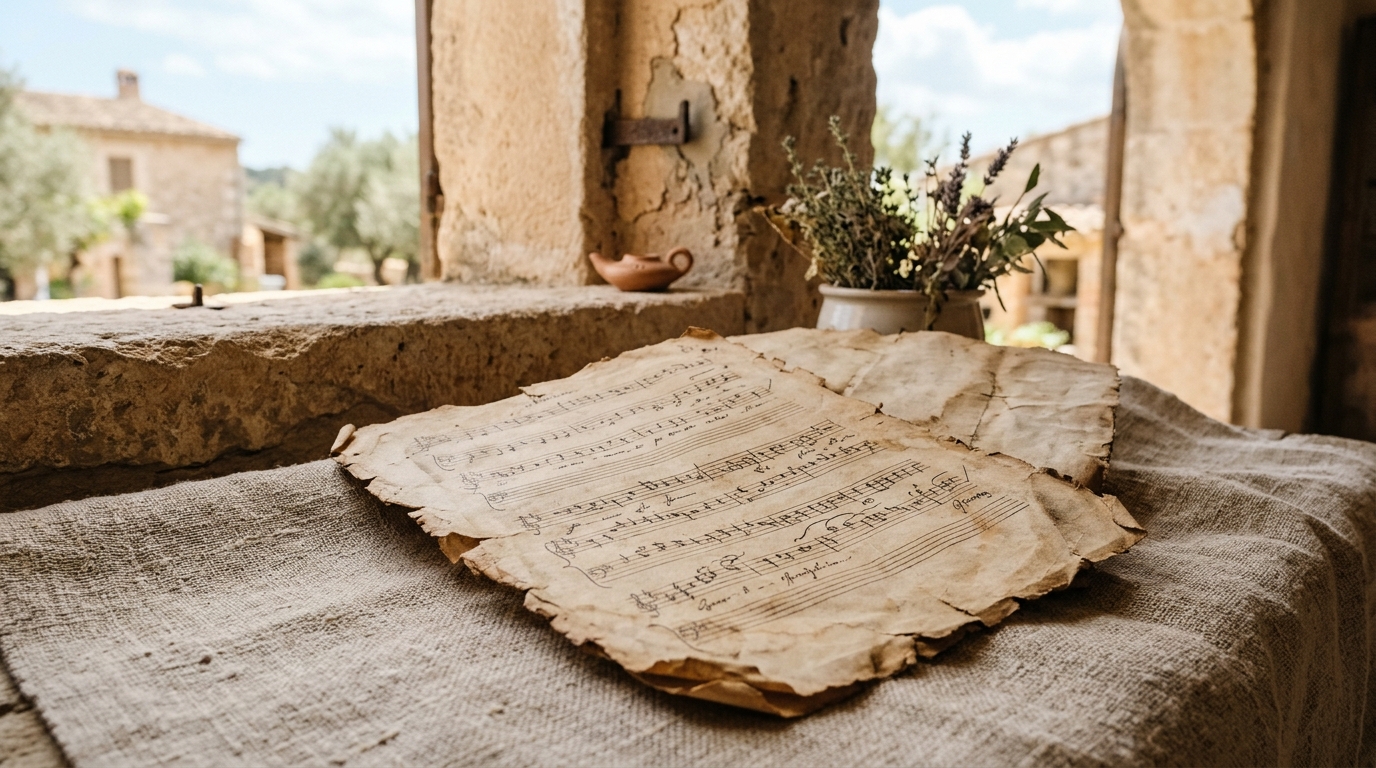
Among all the treasures of traditional Mallorcan music, there is one that transcends the category of folklore to become heritage of all humanity: La Sibil·la. The Chant of the Sibyl is a liturgical drama with a Gregorian melody that was widely performed during the Middle Ages in south-western Europe and is traditionally performed at Midnight Mass in the churches of Mallorca — most notably the monastery of Lluc and the cathedral of Palma — and in the cathedral of Alghero, in Sardinia.
Mallorca and Alghero are the only two places where the chant constitutes a tradition that has continued uninterruptedly from the Late Middle Ages to the present day, having remained immune even to the prohibition of the Council of Trent. On 16 November 2010, UNESCO decided to include the Chant of the Sibyl on its Representative List of the Intangible Cultural Heritage of Humanity. This international recognition endorses the exceptional nature of traditional Mallorcan music in the European context and places it on a par with the world’s great intangible heritages.
The chant is performed on the night of 24 December in all the churches on the island of Mallorca, during the matins service on Christmas Eve. It is sung by a boy or a girl, accompanied by at least two acolytes; during the chant they process through the church until they reach the choir, while the singer holds a sword upright before their face. Attending this rite in a rural church on the island — with centuries-old stones as witnesses and the silence of the night as a backdrop — is one of the most emotionally powerful experiences that traditional Mallorcan music can offer.
Folk music festivals: the calendar of living tradition
Traditional Mallorcan music does not live only in archives or museums: it has its own festive calendar that keeps it alive and in contact with new generations. The island’s folk festivals are the best opportunity to experience this heritage in its natural context.
FolkAndratx: folklore in the southwest
The traditional dance festival FolkAndratx has now reached its third edition and coincides with the Fira d’Andratx, establishing itself as one of the municipality’s leading cultural events and a point of reference for traditional Mallorcan music in the southwest of the island. It is one of the few folklore festivals held in Mallorca and features the participation of groups from different parts of Spain, driven by the Aires d’Andratx group with the support of the Ajuntament d’Andratx and the Federation of Choral and Dance Associations of Spain.
Festival Internacional del Pla de Mallorca
In the Pla de Mallorca — a region grouping 15 agricultural municipalities — the Festival Internacional Mancomunitat Pla de Mallorca takes place from July to September; since 1988, it has promoted free concerts in churches, temples and parishes. This festival is especially valuable because it brings traditional Mallorcan music to the spaces where it has always lived: the stone interiors of rural Mallorcan churches, with their natural acoustics and their historical weight.
Festival de Pollença and other summer classics
The Festival de Pollença is a classic of the Mallorcan summer; its venue is the cloister of Santo Domingo, a 17th-century enclosure with excellent acoustic conditions. Although its programme is primarily classical music, the architectural setting and the atmosphere it generates connect directly with the sensibility that permeates the entire musical tradition of the island and with the spirit of traditional Mallorcan music.
Port de Sóller also hosts its own folk festival, which celebrates traditional Mallorcan music and dance in the picturesque port of Sóller, with performances, workshops and parades that allow visitors to immerse themselves in the island’s rich cultural heritage.
Festival calendar: when and where to experience the tradition
One of the most common questions from those who want to experience traditional Mallorcan music live is: when and where? The answer is that the island offers opportunities practically throughout the year. The following table lists the most notable events, organised by month, so that you can plan your visit in advance.
| Month | Event / Festival | Municipality | Music / Dance |
|---|---|---|---|
| January (17th) | Festa de Sant Antoni | Sa Pobla, Manacor, Artà | Ximbomba, gloses, ball de bot |
| March–April | FolkAndratx (Fira d’Andratx) | Andratx | Ball de bot, regional dances |
| May–October | Festes patronals dels pobles | Sineu, Petra, Algaida, Porreres… | Ball de bot, ball des cossiers, xeremies |
| July–September | Festival Internacional del Pla de Mallorca | 15 municipalities of the Pla | Traditional music, concerts in churches |
| July–August | Festival de Pollença | Pollença | Classical and traditional music |
| Summer | Festival Folk Port de Sóller | Port de Sóller | Ball de bot, dances, workshops |
| 24 December | Matins and La Sibil·la | All churches in Mallorca | Gregorian chant, UNESCO heritage |
Where to learn: workshops and schools
Those who visit Mallorca wanting to go beyond mere observation have good news: the island has a well-established network of schools and cultural associations where it is possible to take your first steps in traditional Mallorcan music, whether you are a resident or just passing through.
- Escola de Música i Danses de Mallorca (Palma, Costa de Can Santacília, 3): an association dedicated to the dissemination, study and teaching of traditional dances, music and instruments; it offers weekly classes in jotas, boleros, mateixes, xeremies, tamborino and flabiol.
- Escola de Ball de Bot Calabruix (Palma, IES Son Pacs): a ball de bot school with classes for all levels, from beginners to advanced, focused on keeping traditional Mallorcan music alive among younger people.
- Escola de Ball de Bot Dit i Fet (Llucmajor): workshops for all ages and all levels, with courses from September to June of one or two hours per week, including boleros, jotas, fandangos, mateixes and castanets.
In addition to these established schools, the casals de barri in Palma and many inland town councils organise occasional ball de bot and xeremies workshops throughout the year, especially around the festes patronals, thus helping to keep traditional Mallorcan music alive in every corner of the island.
How to experience traditional Mallorcan music today
The best way to approach traditional Mallorcan music is not through a screen, but live, in the spaces where it was born. The patron saint festivals of the inland villages — Sineu, Petra, Algaida, Porreres — are the most authentic setting: there the ball de bot is not a performance for tourists, but a real celebration in which residents of all ages take part. Traditional Mallorcan music takes on its full community dimension in those moments.
For those visiting Finca Treurer, the estate offers the ideal context for this kind of cultural immersion. Located in the heart of the Pla de Mallorca, surrounded by centuries-old olive trees and a short distance from some of the villages with the most deeply rooted folkloric tradition on the island, Finca Treurer is a privileged starting point for exploring Mallorcan musical heritage. The events the estate organises throughout the year — including concerts, tastings of Treurer extra virgin olive oil and experiences in the natural surroundings — seek precisely that same spirit: connecting people with the authenticity of Mallorca, without artifice.
Passing on the heritage: between school and the village square
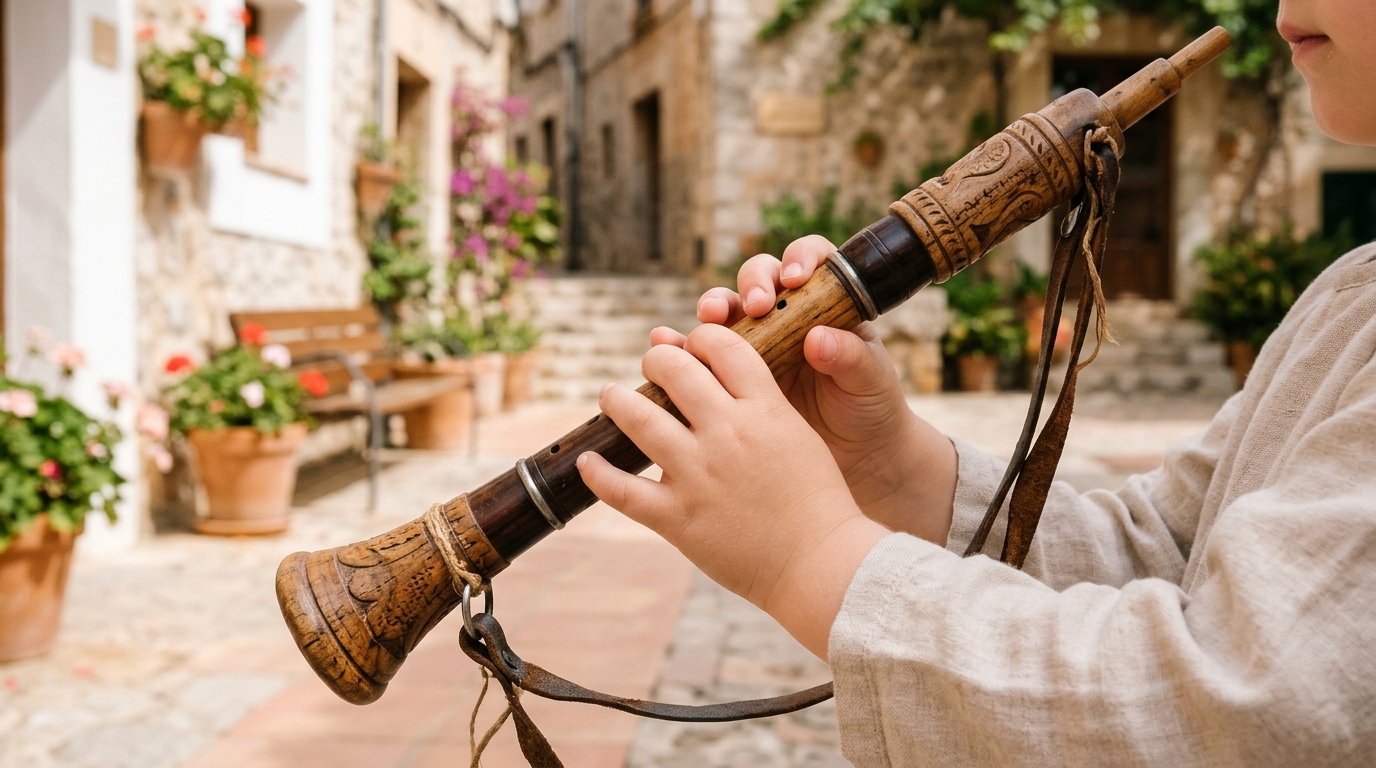
A tradition that is not passed on dies. Traditional Mallorcan music knows this well, and that is why the island has a network of traditional music and dance schools, folk groups and cultural associations working to ensure that new generations learn to play the xeremies, dance the bolero and sing the gloses. The ball de bot and the xeremies have been passed down from generation to generation as symbols of Balearic folklore, and not only do they remain alive at popular festivals, but they have become essential cultural heritage of the Illes Balears.
Oral and community transmission remains the most effective method for keeping traditional Mallorcan music alive: children learn by watching their elders dance in the square, young musicians train alongside veterans in local groups. All the parishes of Mallorca participate in the transmission of their musical rites, with the collaboration of all generations to ensure their continuity. Without this collective effort, traditional Mallorcan music would not have reached our day with the vitality it displays today.
Among the most active groups are Aires Sollerics (Sóller), Esclafits i Castanyetes (Artà) and the Escola de Música i Danses de Mallorca in Palma itself, which organises various showcases, ballades populars and regularly participates in international folk festivals. Following them at their public performances is one of the most direct ways to connect with traditional Mallorcan music in its real context.
In that spirit of transmission and authenticity, Finca Treurer shares essential values with the island’s musical heritage. Just as traditional Mallorcan music has been preserved thanks to the care and dedication of those who love it, Treurer extra virgin olive oil is the result of decades of rigorous work, of respect for centuries-old olive trees and of a firm determination to do things properly, without shortcuts.
Music, land and oil: the soul of Mallorca
Traditional Mallorcan music and the island’s landscape are inseparable. The melodies of the xeremies sound best among olive trees; the ball de bot finds its natural stage in the cobbled squares of inland villages; La Sibil·la needs the ancient stone of a church to unfold all its magic. The identity of Mallorca is built from all these elements at once, and traditional Mallorcan music acts as the thread that binds them together.
When you visit Finca Treurer and taste its extra virgin olive oil — awarded at the most demanding international competitions — you are touching that same fibre. The estate is not just a producer of exceptional EVOO: it is a place where land, tradition and artisanal care merge into something that goes beyond the product. It is, in short, another way of hearing the soul of Mallorca.
If you want your next visit to the island to include a real immersion in traditional Mallorcan music, plan your stay around a festa local, set aside time to explore the Pla de Mallorca and let Finca Treurer be your base of operations. The experience, we guarantee, will be unforgettable.
Frequently asked questions
What is the ball de bot?
The ball de bot is the generic term that groups together the main traditional dances of the Illes Balears, such as the jota, the fandango, the mateixa and the bolero. It is danced at popular festivals and local celebrations, accompanied by instruments such as the xeremies, the tamborí and the fabiol. Its name literally means «jump dance» and it is one of the most recognisable expressions of traditional Mallorcan music.
What are the xeremies?
The xeremies are the traditional Mallorcan bagpipe, a wind instrument consisting of a leather bag that accumulates air and distributes it through the grall (melodic pipe) and the drone. They are usually played together with the flabiol and the tamborí, forming the ensemble known as a mitja cobla. Their sound is bright and piercing, and they are the most iconic instrument of Mallorcan folk music.
What are gloses and glosadors?
Gloses are improvised stanzas that glosadors — popular oral poets — compose and sing on the spot, without musical accompaniment. The Mallorcan glosa has a minimum of four heptasyllabic lines and two single rhymes combined freely. The most spectacular format is the combat de picat, an improvisation duel between two or more glosadors. It is one of the central genres of Balearic intangible heritage and can be heard especially at the Sant Antoni celebrations.
Why is La Sibil·la a UNESCO Heritage?
The Chant of the Sibyl of Mallorca was declared Intangible Cultural Heritage of Humanity by UNESCO on 16 November 2010. It is a liturgical drama with a Gregorian melody performed on the night of 24 December in all the churches of Mallorca. Its uniqueness lies in the fact that Mallorca is one of only two places in the world — together with Alghero, in Sardinia — where this tradition of traditional Mallorcan music has survived uninterruptedly since the Late Middle Ages.
When and where can I see Mallorcan folk dances live?
The best time to see folk dances in their most authentic context is during the patron saint festivals of the inland villages, held mainly between May and October. FolkAndratx, the Festival Internacional del Pla de Mallorca (July–September) and the folk festival in Port de Sóller are notable events at which to enjoy traditional Mallorcan music. In winter, the Sant Antoni celebration (17 January) in Sa Pobla is unmissable for hearing the ximbomba and the gloses.
Can I experience traditional Mallorcan music from Finca Treurer?
Yes. Finca Treurer is located in the Pla de Mallorca, the agricultural region in the interior of the island where traditional Mallorcan music and folkloric tradition are most deeply rooted. From the estate it is easy to access the patron saint festivals of nearby villages and the music festivals of the Pla. In addition, Finca Treurer organises cultural events throughout the year that combine gastronomy, landscape and the most authentic identity of Mallorca.
Sources
{“@context”:”https://schema.org”,”@type”:”FAQPage”,”inLanguage”:”en”,”mainEntity”:[{“@type”:”Question”,”name”:”What is the ball de bot?”,”acceptedAnswer”:{“@type”:”Answer”,”text”:”\u003Cp\u003EThe ball de bot is the generic term that groups together the main traditional dances of the Illes Balears, such as the jota, the fandango, the mateixa and the bolero. It is danced at popular festivals and local celebrations, accompanied by instruments such as the xeremies, the tamborí and the fabiol. Its name literally means \u00abjump dance\u00bb and it is one of the most recognisable expressions of traditional Mallorcan music.\u003C/p\u003E”}},{“@type”:”Question”,”name”:”What are the xeremies?”,”acceptedAnswer”:{“@type”:”Answer”,”text”:”\u003Cp\u003EThe xeremies are the traditional Mallorcan bagpipe, a wind instrument consisting of a leather bag that accumulates air and distributes it through the grall (melodic pipe) and the drone. They are usually played together with the flabiol and the tamborí, forming the ensemble known as \u003Cem\u003Emitja cobla\u003C/em\u003E. Their sound is bright and piercing, and they are the most iconic instrument of Mallorcan folk music.\u003C/p\u003E”}},{“@type”:”Question”,”name”:”What are gloses and glosadors?”,”acceptedAnswer”:{“@type”:”Answer”,”text”:”\u003Cp\u003EGloses are improvised stanzas that glosadors \u2014 popular oral poets \u2014 compose and sing on the spot, without musical accompaniment. The Mallorcan glosa has a minimum of four heptasyllabic lines and two single rhymes combined freely. The most spectacular format is the \u003Cem\u003Ecombat de picat\u003C/em\u003E, an improvisation duel between two or more glosadors. It is one of the central genres of Balearic intangible heritage and can be heard especially at the Sant Antoni celebrations.\u003C/p\u003E”}},{“@type”:”Question”,”name”:”Why is La Sibil·la a UNESCO Heritage?”,”acceptedAnswer”:{“@type”:”Answer”,”text”:”\u003Cp\u003EThe Chant of the Sibyl of Mallorca was declared Intangible Cultural Heritage of Humanity by UNESCO on 16 November 2010. It is a liturgical drama with a Gregorian melody performed on the night of 24 December in all the churches of Mallorca. Its uniqueness lies in the fact that Mallorca is one of only two places in the world \u2014 together with Alghero, in Sardinia \u2014 where this tradition of traditional Mallorcan music has survived uninterruptedly since the Late Middle Ages.\u003C/p\u003E”}},{“@type”:”Question”,”name”:”When and where can I see Mallorcan folk dances live?”,”acceptedAnswer”:{“@type”:”Answer”,”text”:”\u003Cp\u003EThe best time to see folk dances in their most authentic context is during the patron saint festivals of the inland villages, held mainly between May and October. FolkAndratx, the Festival Internacional del Pla de Mallorca (July\u2013September) and the folk festival in Port de S\u00f3ller are notable events at which to enjoy traditional Mallorcan music. In winter, the Sant Antoni celebration (17 January) in Sa Pobla is unmissable for hearing the ximbomba and the gloses.\u003C/p\u003E”}},{“@type”:”Question”,”name”:”Can I experience traditional Mallorcan music from Finca Treurer?”,”acceptedAnswer”:{“@type”:”Answer”,”text”:”\u003Cp\u003EYes. Finca Treurer is located in the Pla de Mallorca, the agricultural region in the interior of the island where traditional Mallorcan music and folkloric tradition are most deeply rooted. From the estate it is easy to access the patron saint festivals of nearby villages and the music festivals of the Pla. In addition, Finca Treurer organises cultural events throughout the year that combine gastronomy, landscape and the most authentic identity of Mallorca.\u003C/p\u003E”}}]}


