


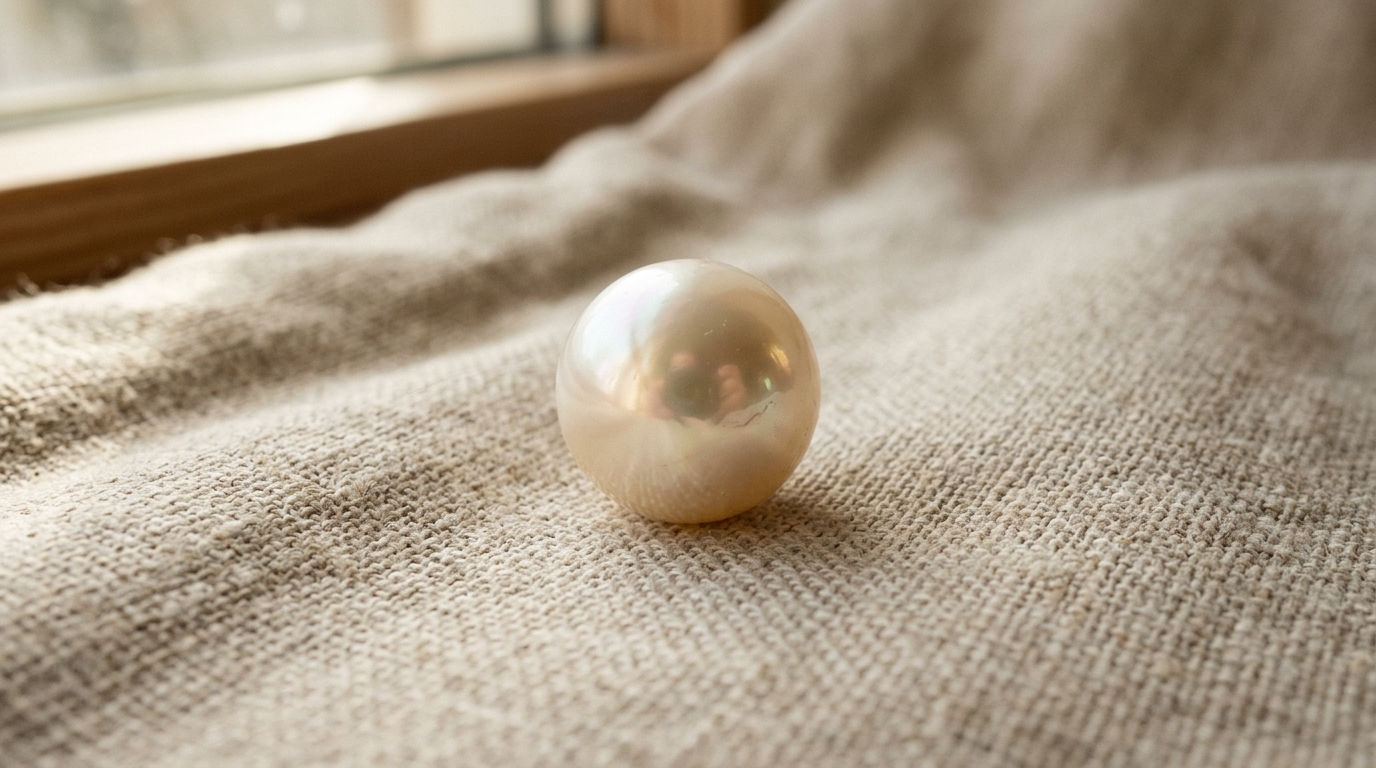
There are objects that transcend seasons. The pearl is one of them: it has adorned the necks of queens and the wrists of artists, survived every aesthetic revolution of the past centuries, and today reappears in shop windows with the same serenity as always. It is not a trend making a comeback; it is a classic that never left. If you wonder why the pearl remains the accessory that makes the most sense to invest in, the answer has much to do with what it represents beyond its lustre.
Contenidos / Contents
- A history of centuries: the pearl as a symbol of power and elegance
- Why the pearl never goes out of style: the keys to its timelessness
- Mallorca and the pearl: a shared identity
- The pearl as a style investment: what to consider
- How to wear pearls today: from classic to contemporary
- Pearl and olive oil: two products that improve with time
- The pearl as a souvenir with soul: carrying Mallorca with you
- How to care for your pearls so they last a lifetime
- Frequently asked questions
- Sources
Contenidos / Contents
A history of centuries: the pearl as a symbol of power and elegance
The pearl has been part of human history for millennia. Mesopotamian civilisations, ancient Rome and the courts of the Renaissance considered it the most precious gift the sea could offer. It was not merely an ornament: it was a declaration of sophistication, of connection with the natural world, and of permanence in the face of time.
What is fascinating is that this symbolism has not aged. Unlike other trends born tied to a specific moment and dying with it, the pearl has known how to adapt to every era without losing its essence. It is worn equally by a queen in a seventeenth-century portrait and by a designer at a contemporary runway show. That ability to travel through time without losing relevance is precisely what makes it a style investment.
There is something in the very nature of the pearl — formed layer by layer, with patience, from an irritation transformed into beauty — that resonates with the idea that what is valuable requires time. It is no different from what happens with a good extra virgin olive oil: the final result only makes sense if the process has been honest and careful.
Why the pearl never goes out of style: the keys to its timelessness
Saying that something is “timeless” can sound like a cliché. But in the case of the pearl, there are concrete reasons that explain why it survives every trend cycle.
Unmatched versatility
The pearl works in practically any context. A classic necklace elevates a casual look; pearl earrings give character to a work suit; a single pearl on a ring adds sophistication without ostentation. There is no other accessory that adapts so naturally to such different registers, from the most casual to the most formal.
That versatility also explains why pearls are making a strong comeback in contemporary jewellery: pearls are being reinvented by fusing the traditional with the contemporary, combining with precious metals and gemstones to create dynamic pieces. The classic pearl necklace now coexists with asymmetric designs, baroque pearls and minimalist proposals that bring this accessory to entirely new audiences.
The pearl and the slow fashion movement
At a time when the more conscious consumer seeks pieces that last and that have a story behind them, the pearl fits perfectly. The resurgence of pearls is attributed to an appreciation for sustainable materials, timeless elegance and personalised jewellery. It is not an ephemeral trend: it is a response to a shift in values.
Pearl jewellery aligns with the same logic that guides the choice of a good extra virgin olive oil or a handcrafted garment: better one excellent piece than ten dispensable ones. A pearl is not bought for this season; it is bought for a lifetime and, many times, for the next generation.
Imperfection as distinction
Baroque pearls, with their unique and irregular shapes, are positioning themselves as protagonists in contemporary jewellery. Their singularity brings a touch of authenticity and sophistication, allowing combinations in both classic and modern styles. These pearls celebrate beauty in imperfection, offering a fresh alternative to traditional pearls.
There is something profoundly honest in that idea. The imperfection of a pearl is not a flaw: it is proof that it is real. In a world saturated with identical and standardised products, the singularity of each piece becomes its greatest value. It is no different from what happens with the extra virgin olive oil from an estate like Treurer: each harvest has its own character, and that is not an inconsistency — it is authenticity.
Mallorca and the pearl: a shared identity
To speak of pearls in Mallorca is to speak of a tradition that forms part of the island’s DNA. The first artificial pearl factory was founded in 1897 in Manacor, Mallorca, by the German industrialist Eduard Frederic Hug Heusch. From that moment on, Manacor became the world capital of the Mallorcan pearl, exporting its pieces to shops all over the world.
By the mid-twentieth century, Mallorcan pearl jewellery was already being exported worldwide, carried by tourists as souvenirs and sold in luxury shops across Europe and the Americas. But what makes the Mallorcan pearl special is not only its geographical reach, but the know-how behind it. Years of research and development and many hours of manual craftsmanship are what have contributed most to the international reputation of the island’s pearls.
There is a deep connection between the pearl and Mallorcan identity that goes beyond the souvenir. Just as the extra virgin olive oil from Finca Treurer expresses the character of the land, the climate and the work of those who produce it, the Mallorcan pearl embodies decades of craft passed down with rigour. Both products are, in essence, expressions of a territory that understands excellence as something everyday.
In specialist boutiques in Palma, local artisans continue to perfect their art with techniques passed down through generations. Visiting one of these workshops — just as visiting Finca Treurer during the harvest — is to understand that there are products that cannot be mass-produced without losing what is essential.
The pearl as a style investment: what to consider
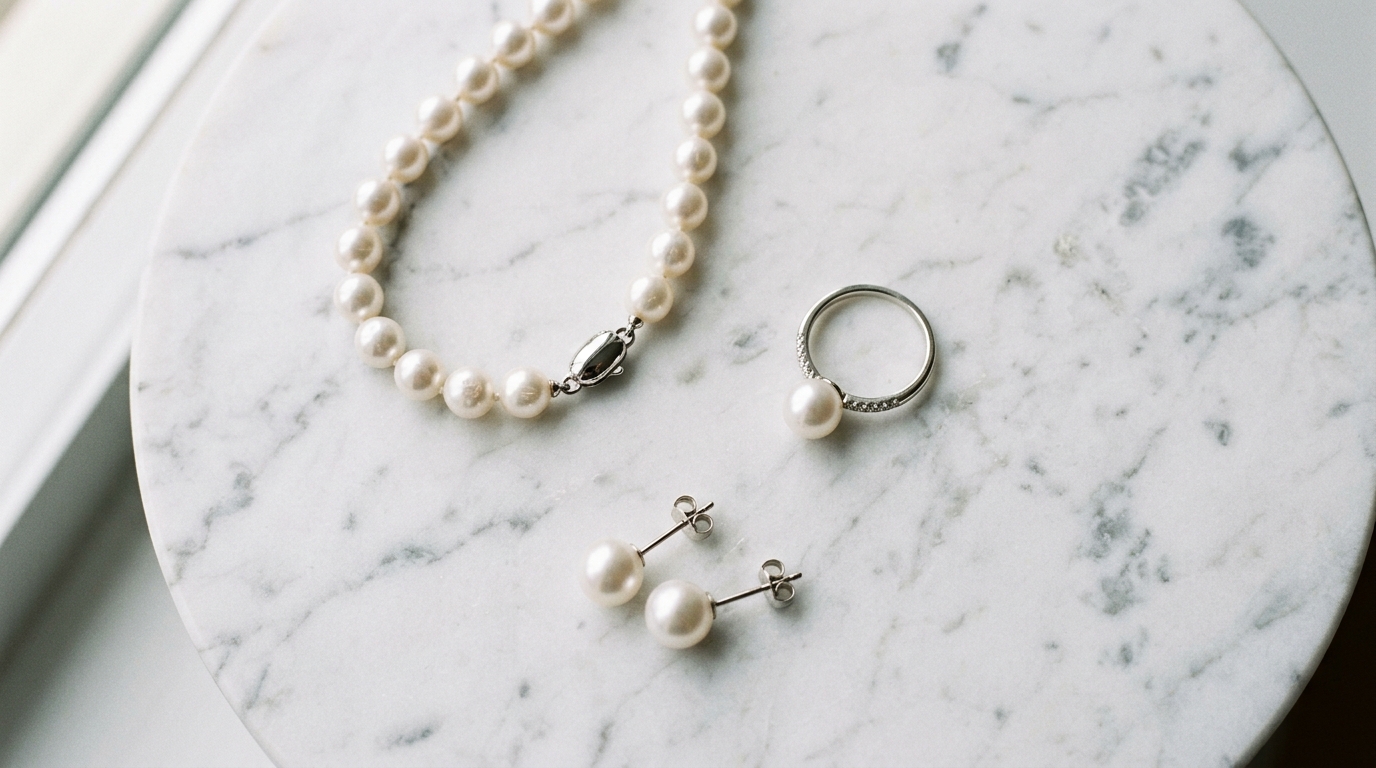
Choosing a pearl should not be an impulsive decision. As with any quality piece, it is worth taking a moment to think about what you are looking for and why.
Natural, cultured and imitation pearls
The market offers three main categories. Natural pearls are the rarest and most valuable: they form without human intervention inside a mollusc. Cultured pearls follow the same biological process, but with a small initial intervention; they are the most common option in quality jewellery. Imitation pearls, such as the Mallorcan ones from Manacor, are made with organic materials and artisanal techniques that give them a lustre very close to the natural one, with an accessibility that has made them famous throughout the world.
No category is intrinsically superior: the choice depends on the intended use, the budget and the meaning each person wishes to give the piece. What does matter, in all cases, is the quality of the execution and honesty about what is being purchased.
How to recognise a quality pearl
Beyond category, there are attributes that determine the value of a pearl: lustre (that inner luminosity that distinguishes it from any mediocre imitation), surface (the cleaner, the better), shape and size. A quality pearl has a life of its own: it reflects light differently depending on the angle, as if it carries within it something that no synthetic material can fully replicate.
In the workshops of Manacor, pearls have travelled the world, competing in numerous international markets, and although the manufacturing process can also be observed, the master formula remains a well-kept secret. That secret is, in reality, the sum of many hours of careful work.
How to wear pearls today: from classic to contemporary
One of the great misconceptions about the pearl is that it only fits formal contexts or older generations. Nothing could be further from the truth. The versatility of pearls makes it easy to incorporate them into fashion styles, from everyday elegance to formal sophistication.
Brands are betting on asymmetric and modern designs, where the elegance of pearls stands out with bold and urban touches. Necklaces with an XL pearl, gold ear cuffs or rings with pearls are key pieces this season. The key is not to be afraid to mix: a baroque pearl alongside a thick silver chain or an asymmetric earring combining pearl and metal are proposals that work equally well on a terrace in Palma and at a dinner in any European capital.
For those who prefer the classic, the pearl necklace remains one of the most elegant pieces in existence. It needs no justification or special context: it simply works. And that, in the world of fashion, is the greatest possible luxury.
Pearl and olive oil: two products that improve with time
It may seem an unexpected comparison, but there is a deep logic to it. Both the pearl and a quality extra virgin olive oil share something essential: they are the result of a slow, honest process that respects natural rhythms. Neither of them admits shortcuts without it showing.
At Finca Treurer, extra virgin olive oil is produced with the same philosophy that should guide the choice of any quality accessory: attention to origin, respect for the process and confidence that what is well made needs no artifice. Treurer’s EVOO, recognised in international markets, is an expression of Mallorcan identity just as a hand-crafted pearl from a workshop in Manacor is.
Both objects gain with time. A well-cared-for pearl develops a deeper lustre over the years; an early-harvest extra virgin olive oil reveals its aromatic complexity when used with attention. Both invite a conscious, rather than compulsive, relationship with them. And both have the ability to turn an everyday moment — a breakfast, a meeting, a stroll along the harbour — into something a little more memorable.
Finca Treurer upholds that same idea of experiential luxury: not the luxury of the logo or the price tag, but that of quality perceived without need for explanation. The pearl, at its best, works in exactly the same way.
The pearl as a souvenir with soul: carrying Mallorca with you

Mallorca has a special ability to stay with those who visit it. Not only because of its coves or its light, but because of that combination of living tradition and unpretentious beauty that permeates everything, from its markets to its estates. Taking home a Mallorcan pearl is taking home a fragment of that identity.
Mallorcan pearl jewellery is an ideal choice for those seeking an authentic and sophisticated memento of their visit to the island. But beyond the souvenir, a well-chosen pearl is a piece that will accompany you for years, accumulating its own stories and, with time, becoming something more than an accessory.
There is something very Mallorcan in that idea. The island does not boast about itself; it simply is. Its most authentic products — the extra virgin olive oil from Finca Treurer, the pearls of its artisans, the architecture of its inland villages — share that same self-assured discretion. They need to convince no one: they speak for themselves.
If you visit Finca Treurer during your stay in Mallorca, you will find that same spirit in every detail: in the colour of the freshly pressed oil, in the silence of the olive groves at dusk, in the conversation with those who have dedicated their lives to doing one thing well. The pearl, at its best, is exactly that: one thing done exceptionally well.
How to care for your pearls so they last a lifetime
A well-cared-for pearl can last generations. But like everything worth having, it requires attention. A few basic guidelines make the difference between a piece that ages gracefully and one that loses its lustre prematurely.
- Put them on last and take them off first: perfumes, hairsprays and cosmetics are the greatest enemies of nacre. Apply any product before putting on your pearls.
- Clean gently: a soft, slightly damp cloth after each use is enough to maintain their natural lustre.
- Store them separately: nacre is softer than most precious stones and can be scratched easily if stored alongside other jewellery.
- Check the thread regularly: if you wear a strung pearl necklace, make sure the thread is in good condition. A trusted jeweller can restring it when necessary.
- Wear them: paradoxically, pearls benefit from contact with the skin. The body’s natural moisture helps maintain their lustre. A pearl kept in a drawer for years can lose its vitality.
Caring for a pearl is, at its core, a practice of attention. Just as with the extra virgin olive oil from Finca Treurer — which gives its best when used consciously, in the right dish, at the right temperature — the pearl responds to the treatment it receives.
Frequently asked questions
What is the difference between a natural pearl and a cultured pearl?
A natural pearl forms without any human intervention: a foreign body enters the mollusc accidentally and the mollusc covers it with nacre spontaneously. They are extremely rare. A cultured pearl follows the same biological process, but a human deliberately introduces the nucleus that triggers the formation of the nacre. The result is practically identical in composition and beauty, but the cultured pearl is far more accessible. The vast majority of pearls found in quality jewellery shops are cultured.
Are Mallorcan pearls natural pearls?
Mallorcan pearls — such as those produced in Manacor — are high-quality imitation pearls, made with organic materials and artisanal techniques developed since the late nineteenth century. They are not natural or cultured pearls in the strict sense, but their manufacturing process is artisanal and their finish is very close to that of real nacre. Their value lies in the craftsmanship, the tradition and the cultural identity they represent, not in their biological origin.
How do I know if a pearl is of quality?
The main indicators are lustre (it should have a deep, almost inner luminosity), surface (the cleaner and freer of imperfections, the better), shape and size. A classic test is the tooth test: a real or cultured pearl produces a slight gritty sensation when rubbed against the tooth, whereas a low-quality imitation feels completely smooth. For any significant purchase, always go to a trusted jeweller who can certify the origin and quality of the piece.
What clothes do pearls go well with?
Pearls are one of the most versatile accessories in existence. They work with formal looks — a suit, a cocktail dress — but also with more casual proposals: a white shirt, a knitted jumper or even a basic T-shirt. The key is not to overload the outfit: if the pearls are the protagonist, the rest of the look can be very simple. Today, contemporary designs with baroque or asymmetric pearls also allow them to be worn in urban and relaxed contexts.
Where can I buy authentic pearls in Mallorca?
Manacor is the historic centre of Mallorcan pearl production, with several factories that allow visitors to observe the process and purchase pieces directly. In Palma you will find specialist boutiques with collections ranging from the most classic designs to contemporary proposals. If you are looking for artisanal jewellery with a more authorial approach, the design markets and some galleries in Palma’s old town are a good option. It is always advisable to ask about the origin and manufacturing process before buying.
Sources
{“@context”:”https://schema.org”,”@type”:”FAQPage”,”inLanguage”:”en”,”mainEntity”:[{“@type”:”Question”,”name”:”What is the difference between a natural pearl and a cultured pearl?”,”acceptedAnswer”:{“@type”:”Answer”,”text”:”\u003Cp\u003EA natural pearl forms without any human intervention: a foreign body enters the mollusc accidentally and the mollusc covers it with nacre spontaneously. They are extremely rare. A cultured pearl follows the same biological process, but a human deliberately introduces the nucleus that triggers the formation of the nacre. The result is practically identical in composition and beauty, but the cultured pearl is far more accessible. The vast majority of pearls found in quality jewellery shops are cultured.\u003C/p\u003E”}},{“@type”:”Question”,”name”:”Are Mallorcan pearls natural pearls?”,”acceptedAnswer”:{“@type”:”Answer”,”text”:”\u003Cp\u003EMallorcan pearls \u2014such as those produced in Manacor\u2014 are high-quality imitation pearls, made with organic materials and artisanal techniques developed since the late nineteenth century. They are not natural or cultured pearls in the strict sense, but their manufacturing process is artisanal and their finish is very close to that of real nacre. Their value lies in the craftsmanship, the tradition and the cultural identity they represent, not in their biological origin.\u003C/p\u003E”}},{“@type”:”Question”,”name”:”How do I know if a pearl is of quality?”,”acceptedAnswer”:{“@type”:”Answer”,”text”:”\u003Cp\u003EThe main indicators are lustre (it should have a deep, almost inner luminosity), surface (the cleaner and freer of imperfections, the better), shape and size. A classic test is the tooth test: a real or cultured pearl produces a slight gritty sensation when rubbed against the tooth, whereas a low-quality imitation feels completely smooth. For any significant purchase, always go to a trusted jeweller who can certify the origin and quality of the piece.\u003C/p\u003E”}},{“@type”:”Question”,”name”:”What clothes do pearls go well with?”,”acceptedAnswer”:{“@type”:”Answer”,”text”:”\u003Cp\u003EPearls are one of the most versatile accessories in existence. They work with formal looks \u2014a suit, a cocktail dress\u2014 but also with more casual proposals: a white shirt, a knitted jumper or even a basic T-shirt. The key is not to overload the outfit: if the pearls are the protagonist, the rest of the look can be very simple. Today, contemporary designs with baroque or asymmetric pearls also allow them to be worn in urban and relaxed contexts.\u003C/p\u003E”}},{“@type”:”Question”,”name”:”Where can I buy authentic pearls in Mallorca?”,”acceptedAnswer”:{“@type”:”Answer”,”text”:”\u003Cp\u003EManacor is the historic centre of Mallorcan pearl production, with several factories that allow visitors to observe the process and purchase pieces directly. In Palma you will find specialist boutiques with collections ranging from the most classic designs to contemporary proposals. If you are looking for artisanal jewellery with a more authorial approach, the design markets and some galleries in Palma\u2019s old town are a good option. It is always advisable to ask about the origin and manufacturing process before buying.\u003C/p\u003E”}}]}


