


Do you want to understand why Mallorca’s olive oil has such a singular personality? The answer lies not only in the soil or the climate: it lies in the hands and decisions of generations of olive oil masters who, over centuries, transformed a subsistence crop into an indispensable hallmark of the island.
Contenidos / Contents
- The Mallorcan olive grove: a landscape cultivated for centuries
- The oil lineages: families that defined the craft
- The machinery of knowledge: historic oil mills
- Native varieties: the genetic legacy of Mallorcan producers
- The role of the possessions in shaping the olive oil heritage
- Finca Treurer: living memory of a centuries-old tradition
- The challenge of transmission: between memory and innovation
- Why knowing this history matters today
- Frequently asked questions
Contenidos / Contents
The Mallorcan olive grove: a landscape cultivated for centuries
Mallorca has been linked to the olive tree for millennia. The first organised cultivation arrived with the Roman presence, but it was during the Middle Ages that the olive grove became the economic engine of the Serra de Tramuntana. The steep hillsides, which today form part of the UNESCO World Heritage Site, were transformed inch by inch by farmers who built dry-stone terraces to reclaim land from the mountain.
That collective effort was not anonymous. Behind every terrace, behind every centuries-old tree, there were entire families who passed knowledge from parents to children: how to prune without damaging the tree’s structure, when to begin harvesting according to the ripeness of the fruit, how to regulate the pressure of the mill to extract the oil without bitterness. That body of practical knowledge is what we call the Mallorcan olive oil tradition today.
The oil lineages: families that defined the craft
The history of olive oil in Mallorca is not written with company names, but with family surnames. For generations, olive oil knowledge was passed on orally and practically, within the agricultural estates that dominated the island’s interior: the possessions, large farms that functioned as self-sufficient economic units.
On these estates, the olive oil master — known locally as the person in charge of the molí d’oli — was a figure of technical and moral authority. He not only supervised the milling: he made decisions about the exact moment of the harvest, managed the work of the day labourers, and guaranteed the quality of the final product. His judgement determined whether the season would be good or mediocre.
This model of family production, centred on the silent accumulation of experience, explains why Mallorcan oil developed such distinctive characteristics: native varieties such as the Mallorcan Arbequina and the Mallorquina, adapted to specific conditions of altitude and humidity, and harvesting techniques that prioritised the integrity of the fruit over speed.
The machinery of knowledge: historic oil mills
The molins d’oli as centres of knowledge
For centuries, the oil mills — molins d’oli — were far more than production facilities. They were spaces of technical exchange where producers from different estates shared observations about the harvest, compared results, and adjusted their methods. The mill master acted as an arbiter of quality and as the custodian of inherited techniques.
Many of these historic mills are still preserved in the island’s interior, some still in use and others as architectural heritage. Their structure — the wooden beam, the granite stones, the fired-clay jars — reflects an engineering adapted to the terrain and to the needs of an artisanal production that sought not volume, but character.
The transition to modernity without losing the essence
Throughout the twentieth century, mechanisation also reached the Mallorcan olive groves. Hydraulic presses replaced beam presses, and later continuous centrifuges arrived. But the producers most committed to quality understood that technology should serve tradition, not the other way around.
That tension between innovation and roots is one of the most interesting features of Mallorca’s agricultural heritage: the island’s finest olive oil masters did not reject modernity, but integrated it with discernment, maintaining the early harvesting schedules, varietal care, and respect for the fruit that their ancestors had codified through decades of practice.
Native varieties: the genetic legacy of Mallorcan producers
One of the most enduring contributions of Mallorcan olive oil masters is the preservation of native olive varieties. While other Mediterranean regions opted for high-yield varieties, Mallorcan producers maintained centuries-old trees of local varieties, many of them with modest yields but unique organoleptic profiles.
The Mallorquina variety — also called Empeltre in other areas — produces an oil with a mild flavour, with notes of almond and fresh grass, very different from the more intense profile of varieties such as Picual or Hojiblanca. Preserving that difference was not an accident: it was a conscious decision by generations of farmers who valued identity above yield.
The role of the possessions in shaping the olive oil heritage
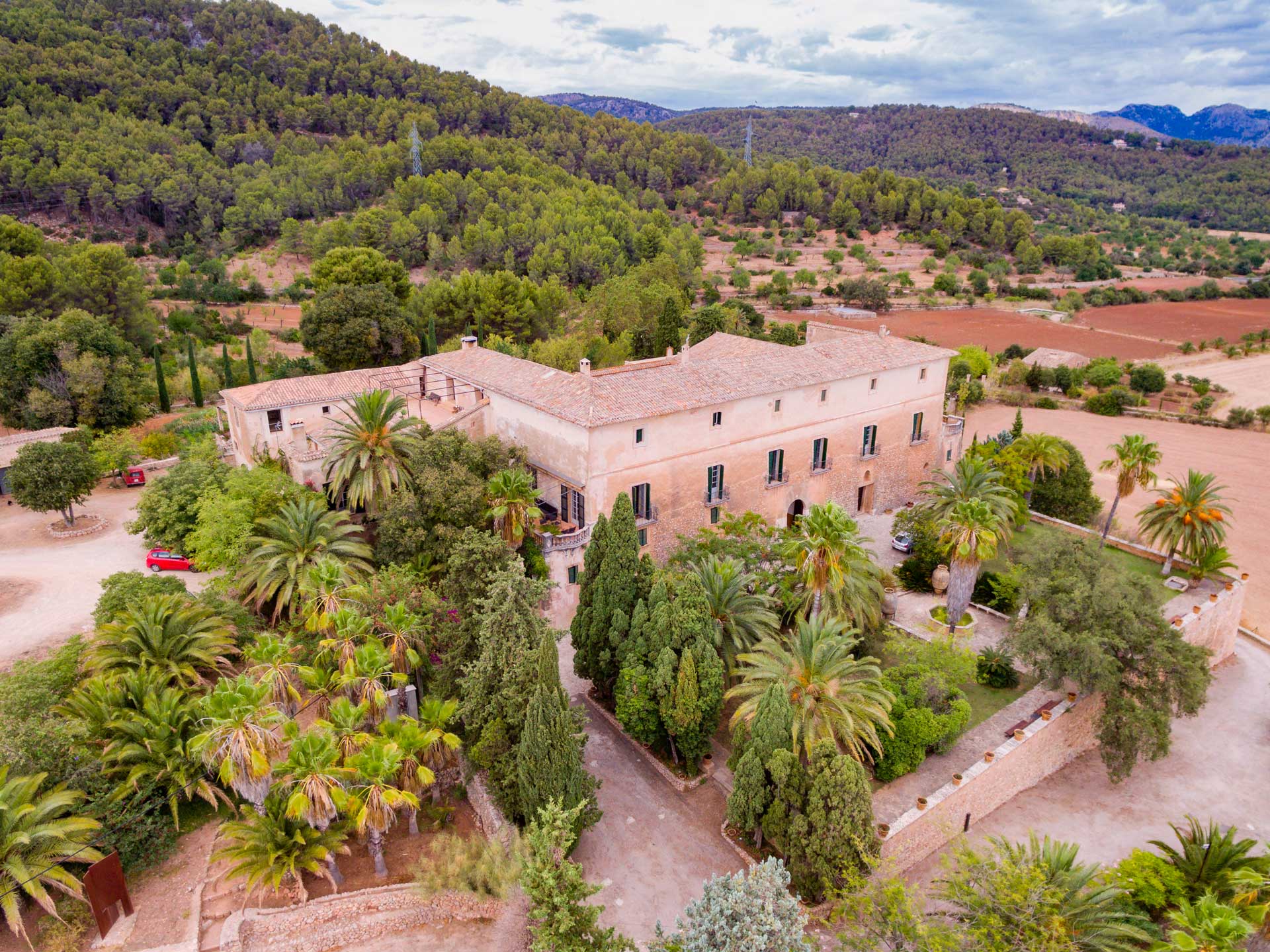
The great historic estates of Mallorca — the possessions — were the undeclared educational institutions of the olive oil sector. In them, young people learned the craft by working alongside the masters, observing and repeating until they had internalised the rhythms of the olive grove: winter pruning, soil tillage, monitoring the fruit through summer, the urgency of the autumn harvest.
This informal apprenticeship system was extraordinarily effective for centuries. Its weakness was also its strength: it depended on family continuity and on the willingness to pass knowledge on. When a family left the estate or changed activity, part of the accumulated knowledge was lost with them. That is why the estates that have maintained generational continuity are those that best preserve this intangible heritage today.
Finca Treurer: living memory of a centuries-old tradition
In the municipality of Algaida, in the heart of inland Mallorca, Finca Treurer today represents one of the most coherent examples of continuity with that tradition of olive oil masters. The estate works with centuries-old olive trees and applies early-harvest criteria that maximise the oil’s polyphenols, following a logic that historic Mallorcan producers knew intuitively: fruit harvested before full ripeness yields a more complex, more vibrant oil.
Treurer’s EVOO has received international recognition, including awards at the NYIOOC, the benchmark competition of the global olive oil sector. But beyond the accolades, what defines Treurer is its relationship with the landscape and with the island’s agricultural memory: each bottle is, in a sense, a document of that history of olive oil masters who forged a way of understanding oil.
The challenge of transmission: between memory and innovation
The greatest challenge facing Mallorcan producers today is precisely the one their predecessors faced at every generational change: how to transmit knowledge that is not written down, that lives in practice and in direct observation of the olive grove.
The difference from the past is that today there are tools to document that knowledge. Some producers have begun to record their harvesting protocols, their pruning criteria, and their observations on how the trees behave under different climatic conditions. Not to replace practical experience, but to complement it and ensure it is not lost if the chain of oral transmission breaks.
At the same time, olive oil science has confirmed many of the intuitions of the historic masters. Early harvesting, careful handling of the fruit from tree to mill, the importance of temperature during extraction: all of this now has a chemical and biological explanation, but it was practised for generations by producers who knew it without the need for a laboratory.
Why knowing this history matters today
Understanding the history of Mallorcan olive oil masters is not an exercise in nostalgia. It is a way of grasping why the olive oil from this island has the character it has, and why it deserves a distinct place at the table and in Mediterranean gastronomic culture.
For the informed consumer, knowing the origin and tradition behind an EVOO changes the experience of consuming it. Opening a bottle of Mallorcan olive oil knowing that behind it lie centuries of accumulated decisions — masters who chose which varieties to preserve, when to harvest, how to mill — is not the same as doing so without that context.
And for professionals in the sector, the history of these producers is also a map of mistakes and successes: what worked, what was lost and why, what is worth recovering. Mallorca’s agricultural heritage is not only a cultural asset: it is a technical resource of the first order for those who want to produce with discernment and with roots.
Frequently asked questions
What olive varieties are native to Mallorca?
The main native varieties of Mallorca are the Mallorquina (also known as Empeltre in other areas) and the Mallorcan Arbequina, a local selection of the Catalan variety. Both produce oils with mild, aromatic profiles, very different from those of higher-yield continental varieties.
What is a molí d’oli and what role did it play in the olive oil tradition?
A molí d’oli is a traditional Mallorcan oil mill. Historically, these spaces were centres of production and also of technical exchange between producers. The mill master was the reference figure for quality and technique, and his judgement determined the outcome of each season.
Why does Mallorcan olive oil have a different profile from that of other regions?
The combination of native varieties, specific climatic conditions (altitude, Mediterranean humidity, calcareous soils) and early-harvest techniques gives Mallorcan oil a mild profile, with notes of almond and fresh grass, that distinguishes it from the more intense oils of the southern Iberian Peninsula.
How does Finca Treurer relate to this historic tradition?
Finca Treurer works with olive trees in Algaida and applies harvesting and production criteria that connect directly with the tradition of Mallorcan olive oil masters: respect for local varieties, early harvesting, and minimal intervention during extraction. Its international awards are the external recognition of a practice rooted in the island’s agricultural history.
{“@context”:”https://schema.org”,”@type”:”FAQPage”,”inLanguage”:”en”,”mainEntity”:[{“@type”:”Question”,”name”:”What olive varieties are native to Mallorca?”,”acceptedAnswer”:{“@type”:”Answer”,”text”:”\u003Cp\u003EThe main native varieties of Mallorca are the Mallorquina (also known as Empeltre in other areas) and the Mallorcan Arbequina, a local selection of the Catalan variety. Both produce oils with mild, aromatic profiles, very different from those of higher-yield continental varieties.\u003C/p\u003E”}},{“@type”:”Question”,”name”:”What is a molí d’oli and what role did it play in the olive oil tradition?”,”acceptedAnswer”:{“@type”:”Answer”,”text”:”\u003Cp\u003EA \u003Cem\u003Emolí d’oli\u003C/em\u003E is a traditional Mallorcan oil mill. Historically, these spaces were centres of production and also of technical exchange between producers. The mill master was the reference figure for quality and technique, and his judgement determined the outcome of each season.\u003C/p\u003E”}},{“@type”:”Question”,”name”:”Why does Mallorcan olive oil have a different profile from that of other regions?”,”acceptedAnswer”:{“@type”:”Answer”,”text”:”\u003Cp\u003EThe combination of native varieties, specific climatic conditions (altitude, Mediterranean humidity, calcareous soils) and early-harvest techniques gives Mallorcan oil a mild profile, with notes of almond and fresh grass, that distinguishes it from the more intense oils of the southern Iberian Peninsula.\u003C/p\u003E”}},{“@type”:”Question”,”name”:”How does Finca Treurer relate to this historic tradition?”,”acceptedAnswer”:{“@type”:”Answer”,”text”:”\u003Cp\u003EFinca Treurer works with olive trees in Algaida and applies harvesting and production criteria that connect directly with the tradition of Mallorcan olive oil masters: respect for local varieties, early harvesting, and minimal intervention during extraction. Its international awards are the external recognition of a practice rooted in the island\u2019s agricultural history.\u003C/p\u003E”}}]}


