If you have ever stood in front of a supermarket shelf or in an olive mill shop and wondered what really distinguishes an extra virgin olive oil from a virgin or a refined one, you are not alone. Labels can be confusing, and the differences go far beyond price. Imagine the first sip of a freshly pressed EVOO: that clean peppery sensation in the throat, that aroma of fresh grass and green olive that instantly transports you to the landscape of centuries-old olive groves in Algaida. That is what separates one category from another. Understanding what lies behind each designation helps you choose better, cook with more discernment and, ultimately, enjoy one of the great treasures of Mediterranean gastronomy.
Article contents
- What each category means: the official classification
- The key differences between categories
- Nutritional properties and health differences
- Culinary uses: when to use each type
- How to read a label and detect real quality
- Protected Designations of Origin (PDO): certified quality
- Territory as a quality factor: the example of Mallorca
- How to choose olive oil according to your situation
Contenidos / Contents
What each category means: the official classification
The European Union precisely regulates the types of olive oil that may be marketed and how they must be labelled. Commission Delegated Regulation (EU) 2022/2104, of 29 July 2022, establishes the current marketing standards and precisely defines the physical, chemical and organoleptic characteristics of each category. This regulation is not arbitrary: it responds to objective criteria that determine the real quality of the product and protect consumers from misleading labelling.
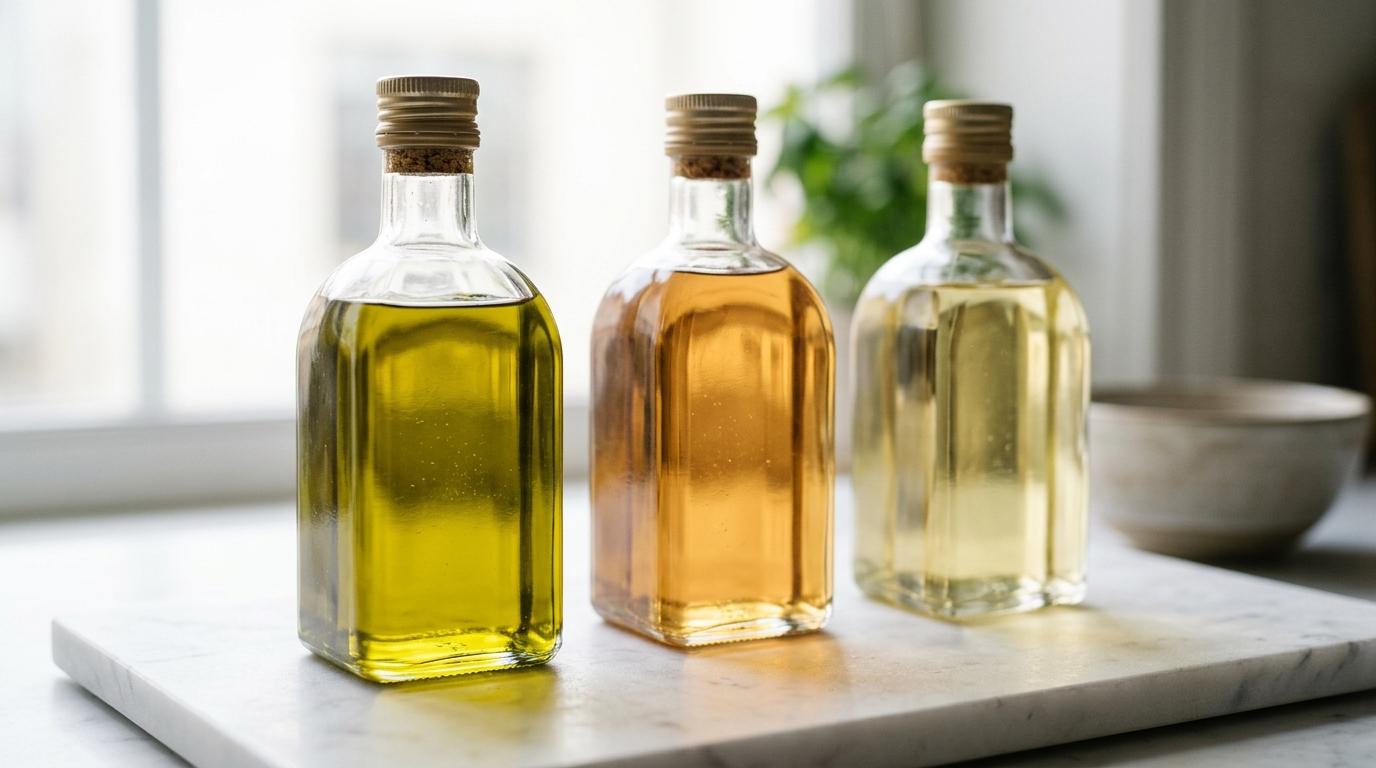
The three main categories you will find on the market are extra virgin olive oil, virgin olive oil and olive oil (plain), which is the commercial name for refined oil blended with virgin. Each has different thresholds for acidity, the presence of sensory defects and the extraction process.
Extra virgin olive oil (EVOO)
This is the highest category. To merit this designation, extra virgin olive oil must be obtained exclusively by mechanical means — without excessive heat or chemical treatments —, have a free acidity of less than 0.8 g per 100 g and show no appreciable organoleptic defects. In professional tasting it must achieve a fruitiness score above zero and a defect score of zero.
This means that extra virgin olive oil reaches the consumer exactly as it comes from the olive: with all its polyphenols, antioxidants, aromas and flavour nuances intact. It is, in essence, a first-press olive juice, with no chemical intervention to alter its original composition.
Virgin olive oil
It shares the extraction method with extra virgin — also mechanical, unrefined — but allows an acidity of up to 2 g per 100 g and may present mild organoleptic defects, perceptible in tasting but not dominant. It is a good-quality oil, though with some imperfection in its sensory profile that places it one step below extra virgin olive oil.
Olive oil (refined)
This category encompasses oils that, due to their high acidity or pronounced sensory defects, cannot be sold directly as virgin oils. They undergo a refining process — which may include heat treatments, active carbon filtration or other physico-chemical methods — to neutralise acidity, unwanted odours and flavours. The result is a neutral-tasting, stable oil fit for consumption, but without the bioactive compounds or the aromatic complexity of extra virgin olive oil.
What is marketed as “olive oil” on the shelf is almost always a blend of refined oil with a small percentage of virgin or extra virgin to restore some colour and flavour. Current regulations require the label to state this with the formula: “oil containing exclusively refined olive oils and virgin olive oils”.
The key differences between categories
Beyond the legal definition, the differences between these three types of oil manifest in very specific aspects that the consumer can perceive and appreciate directly on the plate and in the tasting glass.
| Characteristic | Extra virgin | Virgin | Refined / “Olive oil” |
|---|---|---|---|
| Maximum acidity | ≤ 0.8% | ≤ 2% | ≤ 1% (after refining) |
| Extraction process | Mechanical, cold-pressed | Mechanical, cold-pressed | Chemical or physical refining |
| Aromatic profile | Complex, fruity, defect-free | Fruity with mild defects | Neutral, without character |
| Polyphenols and antioxidants | High content | Moderate content | Very low or none |
| PDO available | Yes (extensive network) | Yes (some) | Not applicable |
| Indicative price | Higher | Intermediate | More affordable |
Nutritional properties and health differences
Extra virgin olive oil stands out for its richness in bioactive compounds that refined oil loses during the production process. Polyphenols — among them oleocanthal and oleuropein — are responsible for the characteristic peppery sensation in the throat that many consumers notice when tasting a good EVOO, and which is an unmistakable sign of freshness and quality. The European Food Safety Authority (EFSA) recognised in 2011 that the polyphenols in extra virgin olive oil contribute to the protection of LDL cholesterol against oxidative damage, thus endorsing the differential nutritional value of extra virgin over refined oil.
These compounds have well-documented antioxidant properties. Refined olive oil, having undergone treatments that eliminate virtually all these micronutrients, becomes a functional cooking fat but without that added value. In terms of monounsaturated fatty acids — primarily oleic acid — all three categories are similar, as refining does not significantly alter that basic lipid profile.
Virgin oil occupies an intermediate position: it retains some of its polyphenols, though in lower concentration than extra virgin olive oil, depending on the olive variety, the time of harvest and the production process. The earlier the harvest and the faster the extraction process, the higher the concentration of bioactive compounds in the resulting extra virgin olive oil.
Culinary uses: when to use each type
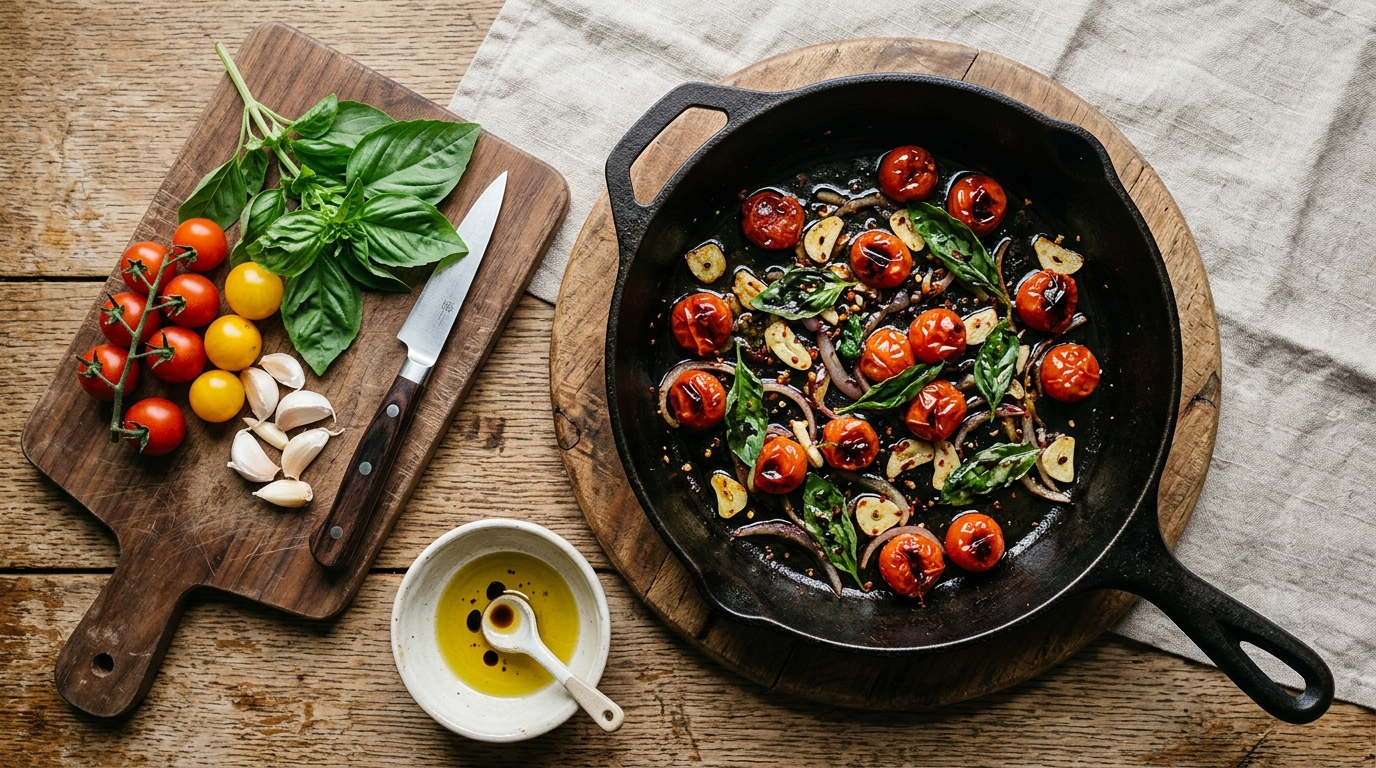
Choosing the right oil for each preparation not only affects the flavour of the dish; it also influences thermal performance and the preservation of its properties. Here is the practical guide.
When to use extra virgin olive oil
Extra virgin olive oil shines when used raw. Dressing a salad, finishing a pasta dish, dipping bread, preparing a vinaigrette or drizzling roasted vegetables just before serving are situations where its aromatic complexity makes all the difference. It is also ideal for preparations at moderate temperature: gentle soffritos, confit dishes and light sautés.
Contrary to a widespread myth, extra virgin olive oil withstands the temperatures typically used in domestic cooking. Its smoke point — which varies depending on the variety and acidity — is sufficient for normal frying. What it does lose with intense and prolonged heat is some of its volatile compounds and polyphenols, so reserving it for raw uses maximises its gastronomic and nutritional value.
Two concrete ideas for making the most of a good EVOO
Mallorcan pa amb oli: Rub half a slice of toasted country bread with a ripe tomato cut in half, add a pinch of sea salt and finish with a generous drizzle of Treurer extra virgin olive oil. The oil is the absolute star: its green fruitiness and clean pungency are expressed without interference. It is the most direct test of the quality of an extra virgin. If you want to explore more recipes with Mallorcan EVOO, discover our recipe collection.
Mallorcan salad dressing (trampó): Mix tomato, green pepper, spring onion and black olives. Dress only with salt and an early-harvest extra virgin olive oil. The absence of vinegar allows the almond and herbal nuances of the extra virgin olive oil to be the guiding thread of the dish. An extra virgin of arbosana or Mallorcan variety is the natural choice for this recipe.
When to use virgin olive oil
Virgin oil is a reasonable option for medium-to-high temperature cooking where the aromatic profile is not the star of the dish. Soffritos, long-cooked stews or preparations where other ingredients dominate the flavour are contexts in which virgin oil fulfils its function without its mild sensory imperfections being perceptible. In these situations, if you have a medium-quality extra virgin olive oil available, it can also be used without any problem.
When to use refined oil
Its neutral flavour makes it suitable for preparations where you do not want the oil to interfere — certain baked goods, neutral-flavoured mayonnaises, industrial frying or fusion cuisines with very defined flavour profiles. It is also the usual option when budget is the determining factor and the quantity needed is large. In those cases, extra virgin olive oil is reserved for moments when its flavour is truly appreciated.
How to read a label and detect real quality
The label of an extra virgin olive oil can say a great deal or very little, depending on how it is written. Knowing what to look for protects you from disappointing purchases.
The first indicator is the legal designation: it must say exactly “extra virgin olive oil”, not “high quality olive oil” or similar formulas without regulatory backing. Next, look at the harvest date or campaign: extra virgin olive oil is a living product that ages, and an oil from two or three previous campaigns will have lost much of its aromatic compounds and antioxidants, even if it technically remains “extra virgin”.
The olive variety is also a valuable piece of information. Each variety has its own sensory profile: picual is robust and persistent, arbequina is softer and fruitier, the Mallorcan arbosana has characteristic herbal notes. Knowing the variety helps you anticipate the flavour and choose the extra virgin olive oil according to your preference or intended use.
The container matters: dark glass or stainless steel protect extra virgin olive oil from light better than plastic or clear glass. An oil in a translucent plastic bottle exposed on a lit shelf will have degraded some of its properties before you even open it. Once opened, always store it in a cool, dark place away from heat sources, and consume it within one to two months to take full advantage of its potential.
- Mandatory legal designation
- “Extra virgin olive oil” — without variants or euphemisms
- Harvest date or campaign
- The more recent, the better preserved its active compounds
- Olive variety
- Indicates the expected flavour profile (picual, arbequina, hojiblanca, Mallorcan…)
- Origin and mill
- Traceability to a specific estate or cooperative is a sign of transparency
- PDO or PGI seal
- Additional guarantee of origin and quality certified by an external body
- Container
- Dark glass or stainless steel, away from light and heat sources
Protected Designations of Origin (PDO): certified quality
Beyond the legal category, there is an additional layer of guarantee that the discerning consumer should know about: Protected Designations of Origin. A PDO certifies that the quality or characteristics of the extra virgin olive oil are fundamentally due to the geographical environment where it is produced — its climate, its soil, its native varieties — and that the entire production, processing and elaboration chain takes place in that delimited area.
Spain is positioned as the world’s leading producer of extra virgin olive oil and has more than 30 Protected Designations of Origin that certify and preserve the unique characteristics of its regional varieties. These PDOs not only protect the reputation of olive-growing regions, but also help consumers identify and select extra virgin olive oils that offer specific sensory characteristics and culinary qualities.
Some of the most recognised PDOs are:
- PDO Aceite de Mallorca: Covers extra virgin olive oils produced in the Balearic Islands with native varieties such as the Mallorcan and arbosana. It is the reference for island quality and the seal that endorses artisan productions such as those of Finca Treurer. If you want to learn more about Mallorcan varieties, consult our guide to Mallorcan olive varieties.
- PDO Siurana: PDO for extra virgin olive oils that meet the characteristics defined in its regulations, produced mainly with arbequina olives in the province of Tarragona. Recognised by the European Union since 21 June 1996.
- PDO Sierra Mágina and PDO Sierra de Segura (Jaén): Their extra virgin olive oils are characterised by their intensity and balance, using predominantly the Picual variety. They are a world reference for robust EVOO with a high concentration of polyphenols.
- PDO Priego de Córdoba and PDO Baena: Two of the most internationally awarded Andalusian designations, with extra virgin olive oils of mature fruity profile and great complexity.
On the label, the presence of a PDO seal is identified by the European logo of the stylised leaf in red and yellow, accompanied by the name of the designation. An extra virgin olive oil with a PDO has passed additional traceability and quality controls that go beyond the legal minimums: it is an extra guarantee, not merely an honorary distinction.
Territory as a quality factor: the example of Mallorca
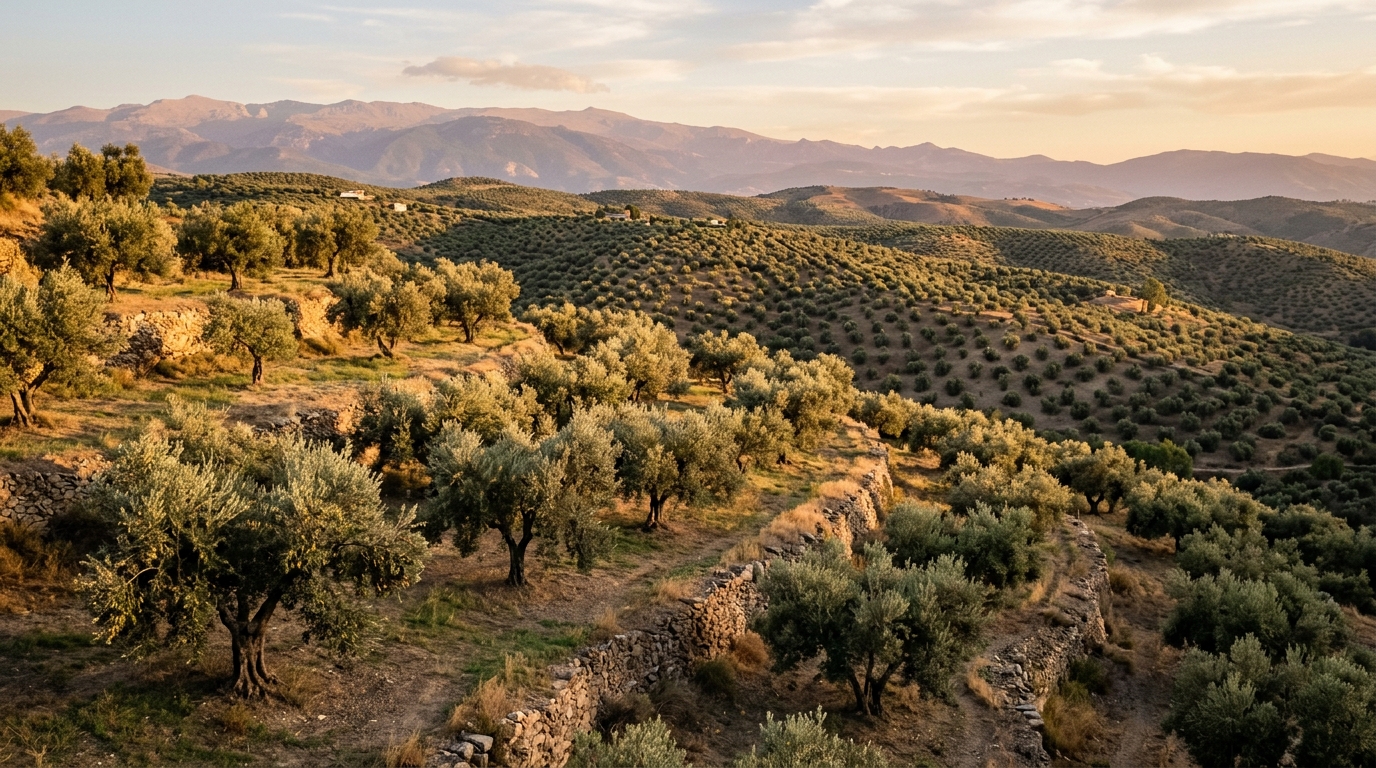
Geographical origin is not a decorative element on the label of an extra virgin olive oil: it directly influences its sensory profile. The Mediterranean climate of the island, the limestone soil of the Serra de Tramuntana and the altitude of the olive groves of the Pla imprint characteristics that cannot be replicated anywhere else in the world.
Mallorca is a representative example of how territory defines an extra virgin olive oil. The Mallorcan varieties — among them arbosana and mallorquina — produce extra virgin olive oils with herbal and almond notes and a balanced structure between bitterness and pungency that distinguishes them from any other mainland EVOO. Walking among the centuries-old olive trees of Algaida during harvest time, when the green fruit is just beginning to turn, is to understand why terroir matters here as much as in the world’s finest vineyards.
Estates such as Finca Treurer, in the municipality of Algaida, work with centuries-old olive groves and produce their extra virgin olive oil to the highest quality standards, caring for every step from early harvesting to cold extraction to preserve all the nuances of the fruit. If you want to experience this first-hand, discover how to visit the estate and take part in a guided tasting.
This type of artisan, controlled-origin production represents the opposite extreme from refined oil: each bottle of extra virgin olive oil is the result of agronomic and production decisions that prioritise quality over yield. It is not the cheapest oil, nor does it pretend to be: it is the oil that has something to say.
How to choose olive oil according to your situation
There is no single answer valid for all contexts. The choice depends on what you are going to use it for, how much you consume and what you value most.
If you cook a great deal and in large quantities, combining a quality extra virgin olive oil for raw uses with a standard olive oil for abundant frying is a reasonable strategy. If your consumption is moderate and you enjoy cooking as an experience, investing in a good extra virgin olive oil of known origin makes sense: the difference on the plate is perceptible from the very first dressing.
For those who travel to producing areas — such as the interior of Mallorca, Jaén, Tuscany or the Peloponnese — buying directly from the mill is the best guarantee of freshness, traceability and fair price. Many estates offer visits and tastings that allow you to understand the process and choose with real criteria, not just the information on the label. On those visits, tasting different extra virgin olive oils side by side is the fastest way to educate the palate.
In any case, the basic criteria do not change: correct legal designation, recent harvest, identified variety, appropriate container and transparent origin — with PDO if possible. With those five elements on the table, it is hard to go wrong when choosing an extra virgin olive oil. And if you are also lucky enough to taste the oil before buying it, let the peppery sensation in the throat and the fruitiness in the nose guide you: the body knows how to recognise quality before the mind can explain it.
Frequently asked questions
Is extra virgin olive oil always better than virgin for cooking?
For raw uses, yes: extra virgin offers more aromatic complexity and a higher concentration of bioactive compounds. For long cooking at high temperatures, the differences are considerably reduced, as heat degrades some of those compounds in both cases. In those situations, a good virgin olive oil is a perfectly valid option.
Can I fry with extra virgin olive oil?
Yes. Extra virgin has a smoke point sufficient for most domestic frying. What happens is that some of its aromas and polyphenols are lost with intense heat, so from a gastronomic and nutritional point of view it is not the use that best exploits its qualities. For frequent and large-quantity frying, a virgin or even refined olive oil is more economically efficient.
What does “cold extraction” mean on the label?
It indicates that the oil has been obtained at a temperature below 27 °C during the centrifugation or pressing process. At higher temperatures more oil is extracted, but delicate aromas and compounds are lost. Cold extraction is a sign that the producer has prioritised quality over yield.
How long does extra virgin olive oil last once opened?
Once opened, it is ideal to consume it within one to two months, storing it in a cool, dark place away from heat sources. Before opening, it can be kept well until the best-before date indicated on the label, provided storage conditions are correct.
How do I distinguish a quality extra virgin olive oil by taste?
A good fresh EVOO presents three positive attributes in tasting: fruitiness (aroma of fresh olive, grass, tomato or almond depending on the variety), bitterness (perceptible in the centre of the tongue) and pungency (sensation in the throat, which can be mild or intense). The absence of these attributes, or the presence of rancid, vinegary or musty notes, indicates a lower quality or aged oil.