


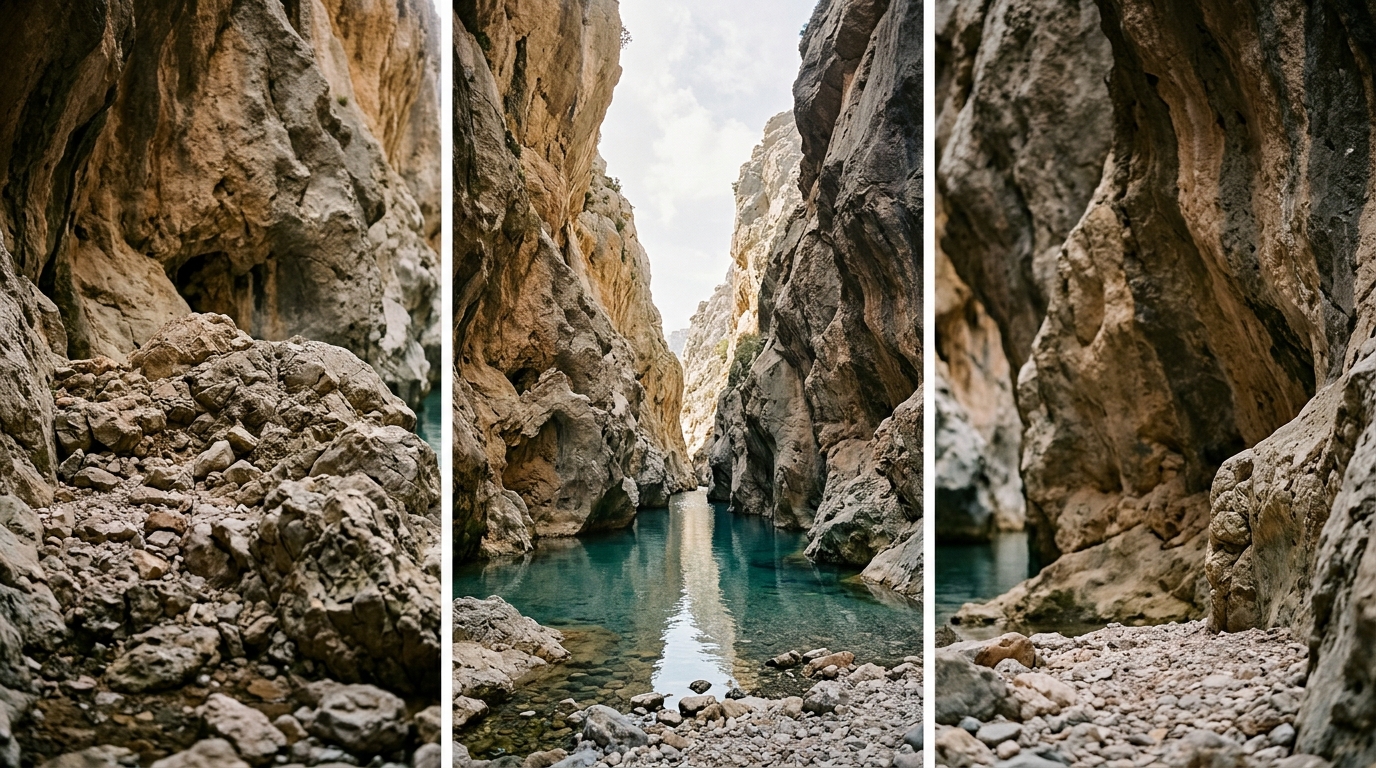
Do you want to discover one of the most awe-inspiring corners of the entire Serra de Tramuntana? The Torrent de Pareis is, without exaggeration, one of the most dramatic landscapes in the Mediterranean: a canyon of limestone walls that carves its way through the mountain until it opens onto a cove of pebbles and turquoise water. Getting there from Palma requires planning, but the journey — winding, spectacular and full of views — is already part of the experience.
Contenidos / Contents
- What Torrent de Pareis is and why it is worth the trip
- How to get to Torrent de Pareis by car from Palma
- Sa Calobra car park: fees and what you need to know
- How to get to Torrent de Pareis by boat from Port de Sóller
- Public transport and organised excursions
- Comparison table of options for getting to Torrent de Pareis
- Regulations and restrictions of the Natural Monument
- What to bring, where to eat and how much time to plan
- Torrent de Pareis and the philosophy of the Serra de Tramuntana
- Frequently asked questions about how to get to Torrent de Pareis
- Sources
Contenidos / Contents
What Torrent de Pareis is and why it is worth the trip
The Torrent de Pareis is the longest and deepest canyon in Mallorca. Its walls exceed 200 metres in height in some sections, and the torrent runs approximately 3,300 metres from its source in the heights of Escorca until it flows out into the small cove of Sa Calobra. In 2003, the Govern Balear declared it a Natural Monument, recognising what any visitor perceives immediately: that this place belongs to a geological scale that surpasses the human.
The cove that receives it is small, made of pebbles and with no beach infrastructure — no sun loungers, no parasols, no rental services. Just nature. That deliberate austerity is part of its charm and also of its fragility. Torrent de Pareis is not a mass-tourism destination in the conventional sense; it is a place that demands respect and preparation, and that rewards with an experience few corners of Europe can match.
From Finca Treurer, in the heart of the Serra de Tramuntana, we understand that philosophy well: the most authentic landscapes of Mallorca are not consumed, they are inhabited with care. The same spirit of preservation that guides our way of cultivating the olive grove and producing our extra virgin olive oil is what makes the Serra a World Heritage Site worthy of that name.
How to get to Torrent de Pareis by car from Palma
The car is, by far, the most flexible option and the most recommended for getting to Torrent de Pareis. The distance from the centre of Palma is approximately 52 kilometres, with a driving time of between 1 hour 15 minutes and 1 hour 30 minutes depending on traffic and the stops you make along the way.
Route via Sóller (the most recommended from Palma)
The most common route from Palma goes through Sóller. Take the Ma-13 heading north to Inca, and from there follow the signs towards Sóller via the Ma-10, the Serra de Tramuntana road. About 15 kilometres from Sóller you will find the signposted turn-off towards Sa Calobra: the Ma-2141, popularly known as the Knot Tie for its 12 kilometres of tight bends and a 270-degree turn where the road literally passes under itself. The descent has an 800-metre drop in altitude and ends at the Sa Calobra car park.
This road is spectacular but demands concentration. It is not suitable for drivers with severe vertigo or for long vehicles. In high season, excursion coaches travel frequently and the road is narrow; it is advisable to descend calmly and respect the verges. The Knot Tie viewpoint, halfway down the descent, offers one of the most photographed panoramas on the entire island: it deserves a brief stop.
Route via Lluc (alternative from the interior)
If you are staying in the centre or east of the island — or if you prefer to avoid the bends of Sóller — there is an equally beautiful alternative. From Palma, take the Ma-13 to Inca and follow the signs towards Lluc. At the junction for the monastery, follow the signs towards Sa Calobra. This route via Escorca is somewhat more direct and allows you to visit the Monestir de Lluc along the way, another of the great spiritual and cultural landmarks of the Serra de Tramuntana.
From Alcúdia or Port de Pollença, the shortest route goes through Pollença, taking the Ma-10 towards Lluc and then the turn-off to Sa Calobra. In all cases, the signposting towards Sa Calobra is clear once you join the Ma-10.
Sa Calobra car park: fees and what you need to know
At the end of the Ma-2141, on Carrer Port de Sa Calobra, you will find the only car park available for accessing Torrent de Pareis by car. It is a paid car park managed with a barrier and an attendant kiosk. The rate is €0.05/minute, with a maximum of €15 per day, according to data collected by AparcarFácil. It accepts credit card, debit card and contactless payment, so it is not essential to carry cash.
Once parked, the cove, the small harbour and the entrance to the Torrent de Pareis canyon are just a few minutes on foot. Access to the torrent is through tunnels carved into the rock that connect Sa Calobra with the mouth of the canyon; these tunnels have lighting and can be walked through without special equipment.
In low season, finding parking is much easier and the atmosphere is noticeably quieter. If you visit Torrent de Pareis outside the summer months, the experience gains in authenticity and silence. Bear in mind that the access tunnels may be temporarily closed for maintenance works — something that typically happens in January and February — so it is worth checking the access status before planning a winter visit.
How to get to Torrent de Pareis by boat from Port de Sóller
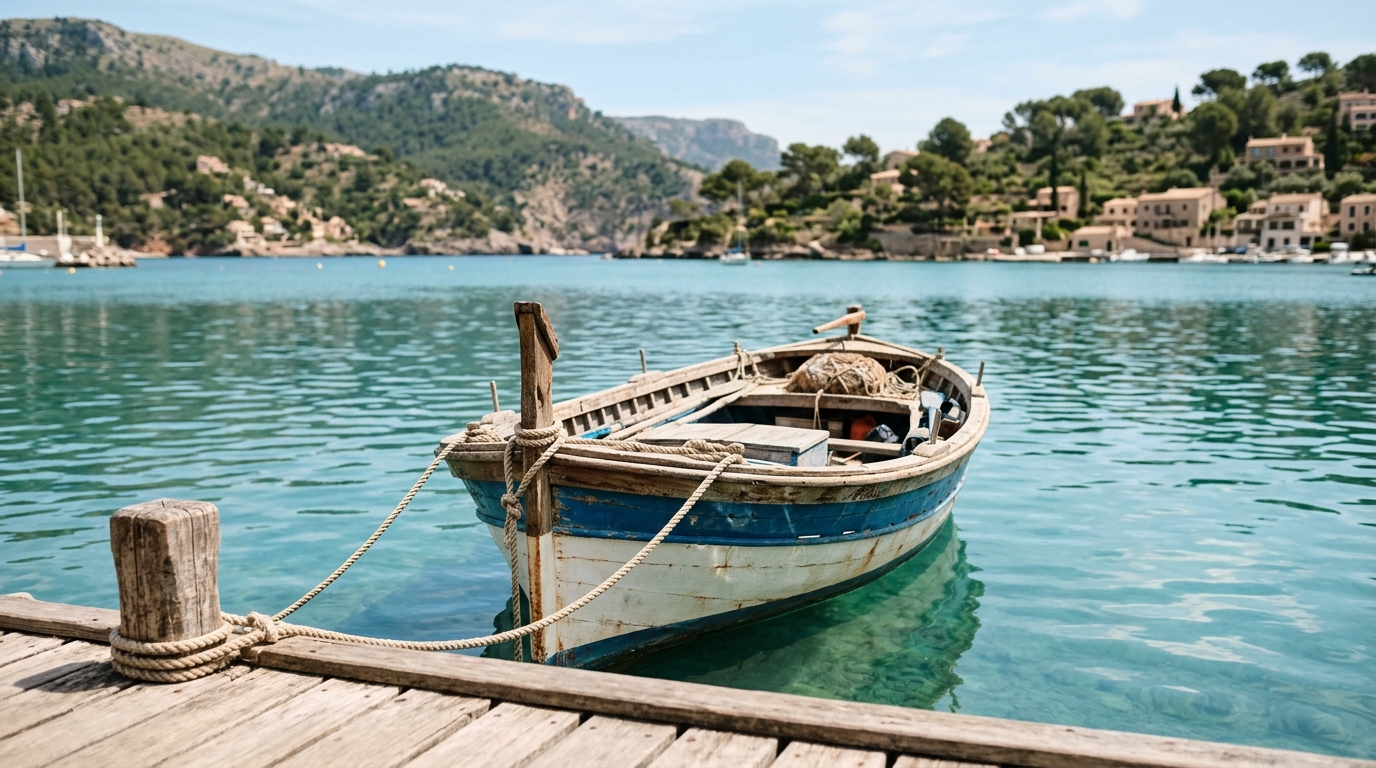
If the car is not your option or you are simply looking for a different perspective, the boat crossing from Port de Sóller is one of the most memorable experiences offered by the north coast of Mallorca. The journey takes approximately 50 minutes and skirts the most vertical cliffs of the Serra de Tramuntana, with views of sea caves, medieval defensive towers and the imposing mouth of the Torrent de Pareis canyon seen from the sea.
The company Barcos Azules operates daily departures from Port de Sóller during the main season, with several time slots throughout the day. The return ticket price is €35 for adults and €18 for children, according to data published on their booking website and confirmed by distributors such as CheckYeti. In low season, services are reduced to specific days of the week, so it is advisable to check updated timetables and book in advance. The boat arrives directly at the cove of Sa Calobra, from where you can access Torrent de Pareis on foot.
To get to Port de Sóller from Palma, you can take the historic train from Palma to Sóller — an experience in itself — and then the tram to the port. This combination of train, tram and boat is, without doubt, the most cinematic option and the one that best embodies the idea that the journey to Torrent de Pareis is part of the experience, not merely a logistical formality.
Public transport and organised excursions
Getting to Torrent de Pareis exclusively by public transport from Palma is possible but complex. There is no direct line connecting Palma with Sa Calobra; the most common combination without a car involves a bus to the Sóller or Lluc area, and from there a taxi or organised excursion for the final stretch. Lines 354 and 355 are the ones that run closest to the Torrent de Pareis area, although timetables vary by season and it is advisable to check them in advance on the Transports de les Illes Balears website.
Organised coach excursions are a comfortable alternative for those who do not want to drive along the Ma-2141 or prefer to delegate the logistics. Numerous agencies offer departures from Palma with hotel pick-up, including the return journey and, in some cases, free time in Sa Calobra. It is the most suitable option for groups or for travellers who arrive at the airport without their own vehicle.
Comparison table of options for getting to Torrent de Pareis
| Option | Approx. time | Indicative cost | Ideal for |
|---|---|---|---|
| Own car (via Sóller) | 1 h 15 – 1 h 30 min | Parking: max. €15/day | Families, couples, independent travellers |
| Boat from Port de Sóller (Barcos Azules) | ~50 min crossing + transfer to Sóller | €35 adult / €18 child (return) | Those seeking a panoramic experience |
| Organised coach excursion | Full day | Variable depending on agency | Groups, tourists without a vehicle |
| Public transport + taxi | 2 hours or more | Low (bus) + taxi for final stretch | Budget-conscious travellers with time |
Regulations and restrictions of the Natural Monument
Torrent de Pareis has been protected as a Natural Monument by the Govern Balear since 2003, and that declaration comes with regulations that are worth knowing before entering the canyon. This is not bureaucracy: these are the rules that make it possible for this place to remain what it is.
According to the official regulations published by the Conselleria de Medi Ambient del Govern Balear, the following activities are expressly prohibited within the area of Torrent de Pareis and the beach of Sa Calobra:
- The extraction or collection of aggregates, rocks or any other geological material.
- Camping and bivouacking outside expressly authorised areas.
- Painting or marking the rocks and walls along the route.
- Uprooting, breaking or cutting specimens of wild vegetation.
- Disturbing wild fauna, collecting eggs or chicks, or damaging nests.
- Any activity that may alter the aquatic systems of the torrent.
Regarding capacity, there is currently no mandatory prior reservation for basic access from Sa Calobra. However, in high season the saturation of the car park acts de facto as a regulator of visitor numbers: when the car park is full, there is no access by car. If you plan the full descent from Escorca, check the updated conditions with the Servei de Protecció d’Espècies of the Govern Balear, as in episodes of rain or flooding access is restricted for safety reasons.
What to bring, where to eat and how much time to plan
Torrent de Pareis has no services inside the canyon. Once you enter the gorge, you are alone with the rock and the silence: pack your bag with enough water (more than you think you need), closed shoes with non-slip soles, sun protection and some food. Water shoes are useful if the bed of the torrent has some moisture.
The basic access to Torrent de Pareis — entering through the tunnels from Sa Calobra and advancing a few hundred metres to the first large chamber of the canyon — is manageable for anyone with normal mobility. The full descent from Escorca, on the other hand, is a demanding hiking route that requires experience on technical terrain, navigation skills and physical fitness. Do not improvise: find out all the details before committing to the full route.
Restaurants in Sa Calobra and estimated visit time
In Sa Calobra you will find some restaurants and a small shop next to the car park. The best known is Restaurante La Calobra, located a few metres from the jetty, with a menu of Mallorcan cuisine and sea views. It is the usual reference point for eating before or after visiting the canyon. In high season it is advisable to arrive early or book, as excursion groups pack the terrace at midday.
To plan the full day, bear in mind these time estimates:
- Access from Sa Calobra to the first chamber of the canyon: 20–30 minutes on foot (including the return).
- Time at the Sa Calobra cove (swimming, resting, photos): 1–2 hours.
- Full descent from Escorca: between 5 and 8 hours depending on physical condition and technical level.
- Combined visit with Lluc (20-minute detour by car): add 1–2 hours.
In total, a relaxed visit to Torrent de Pareis from Palma, with time in the canyon, a swim in the cove and lunch in Sa Calobra, easily takes up a full day. Plan to leave Palma before 8:30 am if you are going in high season.
The best time to visit Torrent de Pareis is outside the peak of summer: May, early June, September and October offer pleasant temperatures, fewer visitors and a light that makes the canyon walls glow in a way that in August, under the overhead sun, cannot be appreciated in the same way. In winter, the torrent may carry water and access is restricted for safety reasons.
Torrent de Pareis and the philosophy of the Serra de Tramuntana
There are places in Mallorca that cannot be understood without the territory that surrounds them. Torrent de Pareis is one of them: its existence is inseparable from the Serra de Tramuntana, that mountain arc declared a UNESCO World Heritage Site that forms the backbone of the northwest of the island and which shelters, in its folds, centuries of culture, agriculture and a deep relationship between human beings and the landscape.
At Finca Treurer we have spent decades cultivating olive groves in that same environment, producing an extra virgin olive oil that is born from the same limestone soil and the same Mediterranean sun that sculpts the walls of Torrent de Pareis. Preserving that landscape is not merely an aesthetic matter: it is the condition that makes it possible for places like Torrent de Pareis to continue existing as we know them, and for products like Treurer EVOO to continue expressing the most authentic identity of Mallorca.
When you plan your visit to Torrent de Pareis, we invite you to understand the journey for what it truly is: an immersion in the Serra de Tramuntana, in its geology, in its silence and in the culture that inhabits it. Finca Treurer, although in another area of the Serra, shares that same philosophy of respect and belonging to the environment. If olive oil is the liquid soul of Mallorca, Torrent de Pareis is its soul of stone.
Frequently asked questions about how to get to Torrent de Pareis
How long does it take to get to Torrent de Pareis from Palma by car?
The distance is approximately 52 kilometres and the driving time ranges between 1 hour 15 minutes and 1 hour 30 minutes, depending on traffic and the stops you make. The most common route goes through Sóller and the Ma-10 road, with the final stretch along the Ma-2141 (the Knot Tie) to Sa Calobra.
How much does parking cost in Sa Calobra?
The Sa Calobra car park has a rate of €0.05/minute, with a maximum of €15 per day. It accepts credit card, debit card and contactless payment. In high season (June–September) it fills up quickly, so it is recommended to arrive before 9:30 am to guarantee a space.
Can you get to Torrent de Pareis by public transport?
There is no direct line from Palma. The most viable option without a car is to combine a bus to the Sóller or Lluc area with a taxi for the final stretch, or to book an organised coach excursion departing from Palma. You can also arrive by boat from Port de Sóller, which avoids driving along the Ma-2141 entirely.
How much does the boat from Port de Sóller to Torrent de Pareis cost?
Barcos Azules operates the Port de Sóller – Sa Calobra route at a price of €35 for adults and €18 for children (return ticket). The crossing takes approximately 50 minutes. You can check timetables and book directly on their website: barcoscalobra.com. It is recommended to book in advance in high season.
Is access to Torrent de Pareis dangerous?
The basic access from Sa Calobra through the tunnels and the first part of the canyon is safe for most visitors. The full descent from Escorca is a technical route that requires experience, good footwear and physical fitness. It should never be undertaken if the torrent is carrying water or if rain is forecast in the mountains.
What time of year is best to visit Torrent de Pareis?
May, early June, September and October are the most recommended months: pleasant temperatures, fewer visitors and a light that enhances the beauty of the canyon. In the height of summer the heat inside the gorge can be intense and Sa Calobra becomes notably crowded. In winter, access may be restricted if the torrent is carrying water.
What is prohibited inside the Torrent de Pareis Natural Monument?
The Govern Balear regulations expressly prohibit: extracting or collecting geological materials, camping outside authorised areas, painting or marking the rocks, uprooting wild vegetation, disturbing wildlife and any activity that alters the aquatic systems of the torrent. Fire is completely prohibited inside the canyon.
Sources
- Sa Calobra
- Torrent de Pareis en Illes Balears Paraje natural …
- Grupo AMADABLAN de Montañismo – Rutas
- ▷ Round Trip Ferry from Port de Sóller to Sa Calobra from 18 € – checkyeti
- Boat schedules Puerto Soller to Sa Calobra, Tuent, Sa Foradada | Barcos Azules – Barcos Azules | Excursiones Marítimas Puerto Sóller S.L.
{“@context”:”https://schema.org”,”@type”:”FAQPage”,”inLanguage”:”en”,”mainEntity”:[{“@type”:”Question”,”name”:”How long does it take to get to Torrent de Pareis from Palma by car?”,”acceptedAnswer”:{“@type”:”Answer”,”text”:”\u003Cp\u003EThe distance is approximately 52 kilometres and the driving time ranges between 1 hour 15 minutes and 1 hour 30 minutes, depending on traffic and the stops you make. The most common route goes through Sóller and the Ma-10 road, with the final stretch along the Ma-2141 (the Knot Tie) to Sa Calobra.\u003C/p\u003E”}},{“@type”:”Question”,”name”:”How much does parking cost in Sa Calobra?”,”acceptedAnswer”:{“@type”:”Answer”,”text”:”\u003Cp\u003EThe Sa Calobra car park has a rate of €0.05/minute, with a maximum of €15 per day. It accepts credit card, debit card and contactless payment. In high season (June–September) it fills up quickly, so it is recommended to arrive before 9:30 am to guarantee a space.\u003C/p\u003E”}},{“@type”:”Question”,”name”:”Can you get to Torrent de Pareis by public transport?”,”acceptedAnswer”:{“@type”:”Answer”,”text”:”\u003Cp\u003EThere is no direct line from Palma. The most viable option without a car is to combine a bus to the Sóller or Lluc area with a taxi for the final stretch, or to book an organised coach excursion departing from Palma. You can also arrive by boat from Port de Sóller, which avoids driving along the Ma-2141 entirely.\u003C/p\u003E”}},{“@type”:”Question”,”name”:”How much does the boat from Port de Sóller to Torrent de Pareis cost?”,”acceptedAnswer”:{“@type”:”Answer”,”text”:”\u003Cp\u003EBarcos Azules operates the Port de Sóller – Sa Calobra route at a price of €35 for adults and €18 for children (return ticket). The crossing takes approximately 50 minutes. You can check timetables and book directly on their website: barcoscalobra.com. It is recommended to book in advance in high season.\u003C/p\u003E”}},{“@type”:”Question”,”name”:”Is access to Torrent de Pareis dangerous?”,”acceptedAnswer”:{“@type”:”Answer”,”text”:”\u003Cp\u003EThe basic access from Sa Calobra through the tunnels and the first part of the canyon is safe for most visitors. The full descent from Escorca is a technical route that requires experience, good footwear and physical fitness. It should never be undertaken if the torrent is carrying water or if rain is forecast in the mountains.\u003C/p\u003E”}},{“@type”:”Question”,”name”:”What time of year is best to visit Torrent de Pareis?”,”acceptedAnswer”:{“@type”:”Answer”,”text”:”\u003Cp\u003EMay, early June, September and October are the most recommended months: pleasant temperatures, fewer visitors and a light that enhances the beauty of the canyon. In the height of summer the heat inside the gorge can be intense and Sa Calobra becomes notably crowded. In winter, access may be restricted if the torrent is carrying water.\u003C/p\u003E”}},{“@type”:”Question”,”name”:”What is prohibited inside the Torrent de Pareis Natural Monument?”,”acceptedAnswer”:{“@type”:”Answer”,”text”:”\u003Cp\u003EThe Govern Balear regulations expressly prohibit: extracting or collecting geological materials, camping outside authorised areas, painting or marking the rocks, uprooting wild vegetation, disturbing wildlife and any activity that alters the aquatic systems of the torrent. Fire is completely prohibited inside the canyon.\u003C/p\u003E”}}]}


