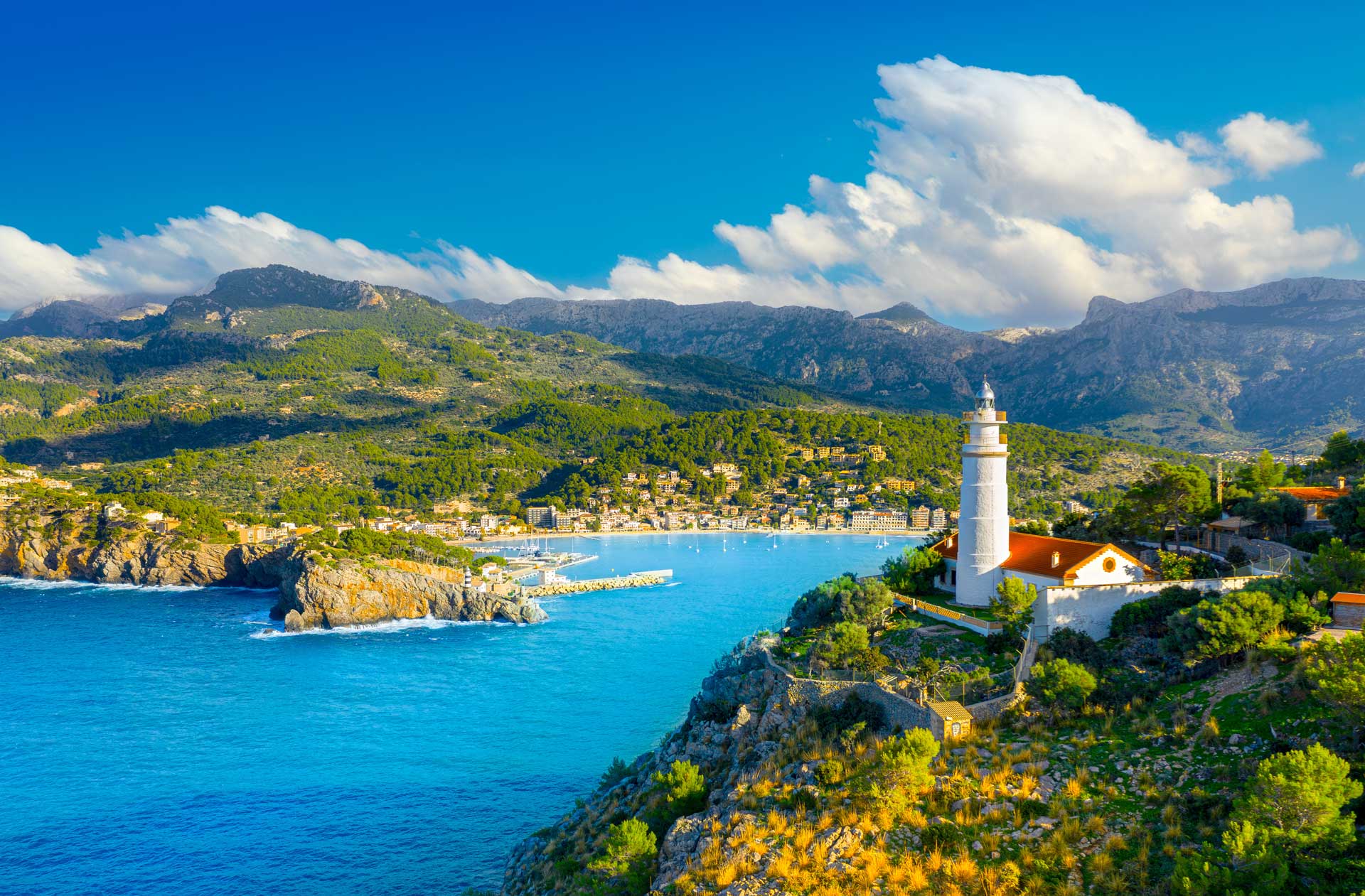
We invite you to join us on a tour of the Serra de Tramuntana (Mallorca), a mountain range declared a UNESCO World Heritage Site (2011) for its cultural landscape and its systems of terraces, crops, and dry stone paths. Explore the northwest of the island and combine rugged nature with historic villages connected by trails such as the GR-221 route.
In this concise guide to the Serra de Tramuntana, we invite you to see Mallorca from its backbone. The Serra de Tramuntana combines Mediterranean mountains, the nearby sea, and dry stone architecture. Here, terraced olive groves descend into silent valleys, while the MA-10 road links coastal viewpoints and stone villages on a route that changes with the light every hour.
Our goal is to help you plan your visit to the Serra de Tramuntana safely and without rushing. You will find suggested itineraries, maps, and an annual events calendar, as well as practical tips to help you enjoy the experience to the fullest. We also suggest gastronomic options that connect what you see in the terraces with what you taste at the table.
Whether you are traveling for the first time or returning to a familiar destination, here you will save time, choose the best times of day and understand why the Tramuntana is a living cultural landscape. We’ll start whenever you’re ready: we’ll guide you step by step, with clear information and useful links so that your plan takes shape from the very first reading.
Contenidos / Contents
What is the Serra de Tramuntana and how can we enjoy it?
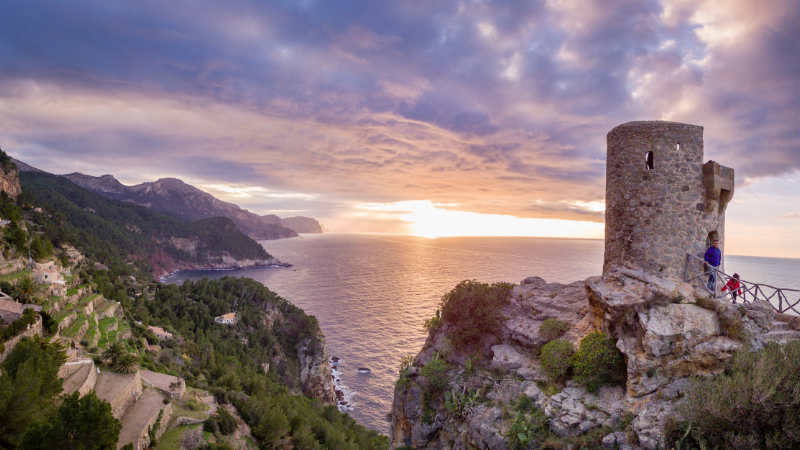
We like to present the mountains through three key elements that you will experience from the very first step: stone, water, and light. The stone supports traditional walls and paths; the water can be sensed in fountains, cisterns, and channels that have irrigated orchards and olive groves for centuries; light shapes the landscape and transforms the experience in Sa Foradada, the Torre de Ses Ànimes tower, and the valleys of Sóller and Fornalutx. This triad makes each stop a different interpretation of the territory.
In the Serra de Tramuntana mountains, you will find what you value. Signposted hiking trails along sections of the GR-221 (Ruta de Pedra en Sec), heritage with a story at the Santuari de Lluc or the Cartuja de Valldemossa, and local products with identity: DOP Mallorca olive oil, citrus fruits from Sóller and seasonal cuisine that understands the landscape. We suggest starting with a simple plan that whets your appetite: a village with character (Valldemossa, Deià, or Sóller), a viewpoint at sunset, and an accessible trail to feel the pulse of the mountains.
We want your visit to spark curiosity rather than haste. That’s why we encourage you to walk quietly, respect the signs and properties, and pause to notice details that often go unnoticed: the texture of a newly repaired wall, the smell of fresh oil in an oil mill, the swaying of the Sóller tram alongside the orange trees. With this perspective, the Tramontana reveals itself as a place worth visiting, offering peaceful days and experiences that connect culture, landscape, and cuisine. This is where the journey begins; in the following sections, we will refine routes, festivities, and flavors so that you can design your trip according to your own criteria.
Where is the Serra de Tramuntana, how to get there and get around
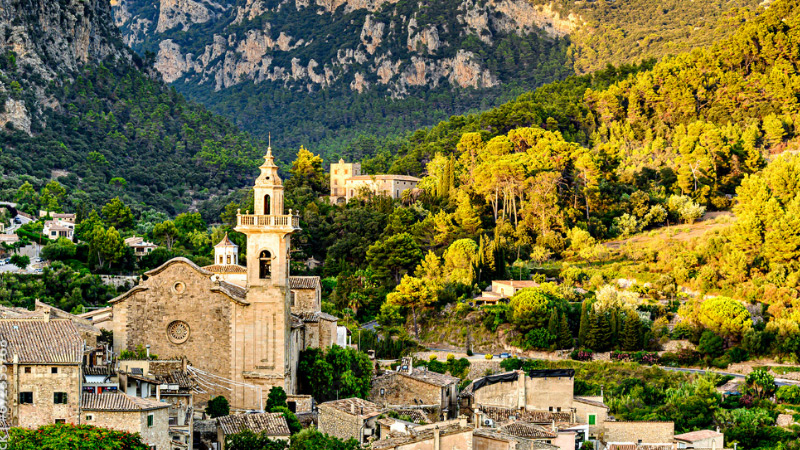
The Serra de Tramuntana is located in the northwest of Mallorca, a mountain range stretching from Andratx to Pollença. From Palma it can be reached in 20–40 minutes depending on the valley, allowing you to combine an urban stay with day trips.
How to get there from the airport (PMI) and Palma
- Rental car: access via Ma-20/Ma-1 (towards Andratx) or Ma-20/Ma-13 (towards Pollença). The Ma-10 connects the scenic route.
- TIB bus: intercity routes to Valldemossa, Deià, Sóller, Pollença and others.
- Sóller train and tram: a scenic option for entering the valley without driving; can be combined with local trails and the tram to the port.
- Bicycle: for planned cycle touring; mountain passes require physical fitness and visibility.
Moving around in the mountains
- Ma-10 (scenic highway): features viewpoints and access points to valleys and villages. Requires careful driving, curves and the presence of cyclists.
- Parking: during peak hours, Valldemossa, Deià, Sóller, Fornalutx, and popular viewpoints become saturated. We recommend arriving early or at sunset and considering TIB in high season.
- Regulated access: areas such as Formentor apply seasonal restrictions . We suggest time slots and alternative locations that are less crowded.
- TIB buses within the mountains: useful for linear routes (traveling by bus and returning on foot via the GR-221, or vice versa).
- Local taxis: convenient for short connections between trailheads and trail ends.
- Soft mobility: in villages we get around on foot; between nearby towns, we value signposted traditional paths.
Practical tips for planning
- Driving time: in the mountains, kilometers go ; we recommend allowing for stops and photos.
- Safety: It is advisable to bring water, layers, and sturdy shoes even on short walks; it is best to avoid shortcuts through private property.
- Weather and light: It is best to adjust your route according to the wind and rain; prioritize sunrise/sunset for Sa Foradada or Ses Ànimes.
- Sustainability: Whenever possible, we suggest opting for public transportation, carpooling, and especially respecting the quiet in small towns.
Base selection according to plan
- Valldemossa–Deià: for heritage and short walks by the nearby sea.
- Valle de Sóller (town and port): easily accessible by train/tram, Biniaraix and good connections.
- Pollença–Formentor: ideal for cliffside viewpoints and beaches; be aware of regulations.
- Banyalbufar–Estellencs: a peaceful stretch for coastal photography and terraces of olive groves.
With this clear logistics—access, pace, and alternatives—we ensure a peaceful journey focused on what is important: enjoying the cultural landscape without rushing.
Route through the villages of the Serra de Tramuntana
We suggest enjoying the Tramuntana over several days, visiting the villages that dot the landscape. The experience becomes magical if we choose sunrises and golden afternoons for each section of the MA-10. At each stop, you can combine viewpoints at their best in terms of light with living heritage, local events, seasonal cuisine with PDO Mallorca EVOO and some purchases of typical products to take home as tasty souvenirs.
Let’s begin the adventure. Here are the stops we recommend.
Andratx · Port of Andratx
We suggest taking in the gentle curves of the southwest and saving Sa Mola for the last light, which outlines the coast and the Puig de Galatzó. We stroll around the Port with its seafaring history and, if we stay for dinner, we choose fish from the market or caldereta with raw EVOO. Typical purchases: salted and preserved seafood, and trencades olives.
Estellencs
We suggest a contemplative stop: the Mirador des Grau viewpoint is beautiful at sunset. Between marjades (dry stone walls) and aljibes (water cisterns), we understand the pulse of the village and enter the Parish Church of Sant Joan. A pa amb oli with sobrasada or cheese maintains the thread of the landscape. Typical purchases: mountain honey, dried figs and local almonds.
Banyalbufar
It is best to arrive in the mid-afternoon: we go down to a marina to read the terraces up close and go back up when the warm light shapes the amphitheater. It is worth taking a moment to visit the hydraulic system of Arab heritage. And for the palate: a glass of Malvasía wine; on the plate, tumbet or grilled fish with EVOO. Typical purchases: Malvasía wine, Malvasía raisins and jars of EVOO from nearby farms.
Esporles
It works very well for combining hiking and culture. If we get up early, we can walk along a section of the Camí des Correu under holm oaks in the dawn light; on the way back, we can visit La Granja d’Esporles for an ethnographic reading. In October, the Fira Dolça is a highlight. Typical purchases: coques and pastries made by local artisans, almonds and herbal liqueur.
Valldemossa
It is especially beautiful first thing in the morning: olive groves and cobbled streets breathe in the morning light. We can take a walk to the Cartuja and remember Chopin and Sand (Frédéric Chopin, Polish composer, and George Sand, French writer, spent the winter of 1838–1839 here, leaving a literary and musical mark that can still be felt), before tasting the delicious coca de patata (potato cake). Typical purchases: cakes to take away, herbes de Mallorca, local pâtés and ceramics.
Deià
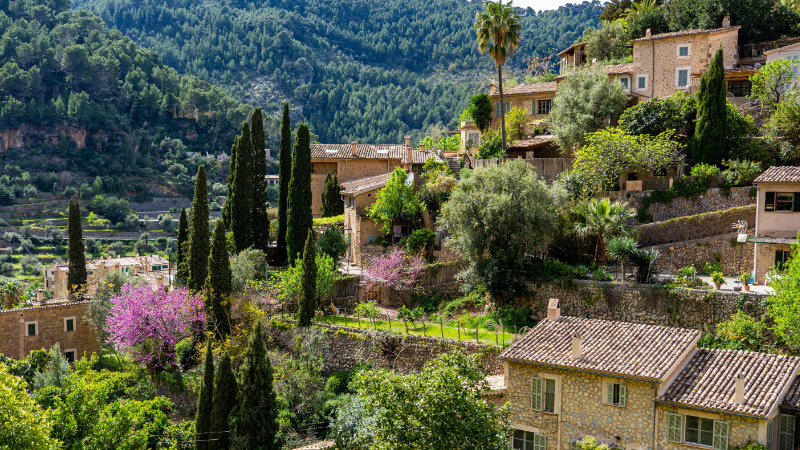
It is a good idea to reserve the golden hour for shots of Cala Deià; the hamlet and cliffs become photogenic in the last light. We suggest spending some time at the Robert Graves House (the British poet and novelist who settled in Deià in 1929 and promoted the village as a cultural center of the Tramuntana), and the cemetery with its views. As a gastronomic recommendation, don’t miss: on the table, roasted vegetables with green EVOO, fish of the day and pa amb oli in season. Typical purchases: prints and artwork by local artists, jams and brown bread.
Sóller · Port of Sóller
If you’re looking for panoramic views, avoid the tunnel and climb the Coll de Sóller at dawn to see the layered valleys; in the evening, the Port bay catches the light beautifully. You can stroll around the Plaça, the Església de Sant Bartomeu and the Jardí Botànic. Typical purchases: jams and citrus fruits from Sóller, gelats (ice creams) made by artisans in takeaway format.
Fornalutx · Biniaraix
Our recommendation is to choose them for a mid-morning break between impeccable dry stone walls and the shade of oak trees. If you have suitable footwear for mountain walks, you can consider walking along the start of the Torrent de Biniaraix to understand the limestone. In September, the fires populares (traditional bonfires) shine brightly. Typical purchases: salty coques, valley cheeses and small-scale honey production.
Lluc · Escorca (Cúber and Gorg Blau)
Arriving at dawn guarantees clear light over Cúber and Gorg Blau, with Puig Major, the highest peak in the Serra de Tramuntana, silhouetted. If you venture into the Santuari de Lluc, with luck, you will be able to hear the Blauets, the sanctuary’s century-old children’s choir that accompanies the worship and musical life of the place. When it cools down, stop for a bite to eat: arròs brut (raw rice); if in season, grilled mushrooms with extra virgin olive oil. Typical purchases: herbal liqueur, high-altitude honey and monastic souvenirs.
Pollença · Formentor
In months with access restrictions, it is advisable to plan your visit in advance. The Es Colomer viewpoint in Pollença is pure magic at sunrise; the Formentor lighthouse offers us an incredible play of blues in the sky and sea in the evening. Back in the historic quarter, the Claustre and the historic quarter are worth a leisurely stroll. Typical purchases: local capers, ensaïmada to take away.
Finca Treurer: the natural extension of the Tramontana, less than an hour away
We suggest an end to the day that you will love: from the valleys of the mountains we descend towards Algaida, a peaceful corridor of almond trees, vineyards, and windmills with the Randa massif on the horizon and stone bell towers among the fields. In this landscape bathed in the slanting light of sunset, we find Finca Treurer, a carefully tended olive grove of Arbequina olives, where they produce Treurer extra virgin olive oil (Arbequina) is produced, recognized as “Best Arbequina in Spain” and ranked 2nd overall. It is an ideal estate to visit, with a hotel integrated into the olive grove for those who wish to stay and experience the countryside at a leisurely pace. Here you can enjoy a guided tasting to learn about fruity, bitter, and spicy flavors, an interpretive walk among terraces, and a seasonal gastronomic experience where extra virgin olive oil structures dishes made with produce from the garden, grains, and fish. Without having to travel far, with the feeling that the interpretation of the territory continues and, now, can be savored.
Seasonal planner — Local produce and EVOO pairings
Choose a season to see local dishes and their pairings with Mallorca PDO extra virgin olive oil. We finish with an extension at Finca Treurer —tasting, walk through the olive grove, and seasonal experience
How we pair: we use raw EVOO and adjust the intensity according to the structure of the dish and the season.
Planner for combinations — 1, 2, and 3 days
Combine **village + short trail + viewpoint** according to your available time. Adjust the hours to the **light** and book **gastronomic stops** at your leisure.
| Time slot | 1 day | 2 days | 3 days |
|---|---|---|---|
| Morning |
Valldemossa · urban walk →
Miranda des Lledoners Soft light and coffee with **coca de patata** (potato cake). |
Day 1: Sóller (modernist square) · easy trail among orange trees. Day 2: Deià · short section of the GR-221. |
Day 1: Lluc · botanical itinerary. Day 2: Banyalbufar · Camí des Correu (section). Day 3: Pollença · **Calvari**. |
| Midday |
**Pa amb oli** with **PDO Mallorca olive oil** and short break. Scenic transfer along the MA-10. |
Day 1: tram to Port de Sóller · seafood cuisine. Day 2: tapas in Deià or afternoon snack at a local bakery. |
Day 1: simple meal in Lluc. Day 2: **local wine** in Banyalbufar. Day 3: Plaza Mayor in Pollença. |
| Afternoon |
Sa Foradada · sunset (arrive 45 minutes early). Alternative: Ses Ànimes. |
Day 1: Ses Ànimes · bring a **windbreaker**. Day 2: Cala Deià if the sea is calm. |
Day 1: wooded walk near Lluc (low light). Day 2: terraces in the sun in Banyalbufar. Day 3: Es Colomer (or sunrise the next day). |
The weather in the Serra de Tramuntana. The best time to visit.
When planning the visit, we consider seasonality, daylight hours, and mountain weather (wind and rapid changes). This allows us to adjust routes, schedules, and equipment.
Spring (March–May) offers mild temperatures and flowering on terraces and in valleys. Ideal for medium trails on the GR-221 and for combining villages + viewpoints without excessive heat. We recommend bringing a windbreaker jacket: the hills can be cool.
Summer (June–September) The highs rise and the sun is intense. We recommend choosing the early morning hours and late afternoon, reserving shaded sections or medium altitudes. Essential items include water (≥1.5 liters per person), sunscreen, a hat and footwear with sturdy soles. For nearby beaches and coves, it is best to prioritize early travel and alternative parking.
Fall (October–November)
Stable but changeable weather on days with north winds. A good time for scenic drives and photography due to the low light. After rain, it is wise to avoid polished ravines (slippery rock) and adjust your plans if there is a tramontana (wind).
Winter (December–February) Shorter days and occasional cold weather at high altitudes. A good time to choose sheltered valleys and heritage walks (Lluc, Cartuja de Valldemossa). There may be humidity or wind, so it’s a good idea to bring a light thermal layer and a compact waterproof jacket.
Hours of daylight and pace of visit
In the mountains, the experience changes with the light. That’s why it’s best to see it at sunrise and sunset in Sa Foradada or Ses Ànimes and organize the day into blocks: 1) transfer, 2) trail, 3) village/table, 4) viewpoint. This way, we can reduce downtime and park more easily.
Wind and terrain
Hills channel gusts; on open ridges, it is best to moderate your exposure and opt for valley routes if the wind is strong. Keep in mind that fog can roll in at any time, so it is important to use a clear trail and basic orientation skills.
What we always take with us (even on short trips)
We recommend the following equipment:
- Water, salty snack, and trash bag.
- Layers: breathable T-shirt, windbreaker; in winter, lightweight thermal.
- Footwear with non-slip soles (polished limestone).
- Sun protection: hat, sunglasses, high SPF.
- Fully charged cell phone and simple track (if we walk).
When to adjust or change your plan
- Recent rain: it is advisable to avoid ravines and polished steps (e.g., Biniaraix may be slippery).
- Strong wind: If there is strong wind, it is preferable to avoid exposed ridges and opt for valleys or urban walks.
- Heat: It is best to reduce exposure to the sun at midday, seek shade, and increase water intake.
Practical summary
To enjoy at a leisurely pace, spring and fall are ideal seasons for hiking, summer is best in the early morning or late afternoon, and winter is perfect for exploring valleys, heritage sites, and viewpoints in clear light. The key to making the best choice is to read the day, adjust your schedule and pack the essentials for a safe and enjoyable experience.
Connect with the Tramuntana and respect it
These are our recommendations for preserving the environment while also enhancing the experience: walk quietly and without music so you can listen to the forest and feel the calm of the place; so that wildlife can maintain its rhythm and we can better connect with nature. On the MA-10, drive slowly to respect cyclists and hikers and only stop at viewpoints and designated areas to enjoy the beauty of the landscape safely. Don’t forget to bring your own bag so as not to leave any trace or leave any waste behind. Of course, we do not take plants, stones, or “souvenirs” with us: it is a matter of observing, taking advantage of the opportunity to take photographs, and leaving everything as we found it. If we go with dogs, we must keep them under control where they are allowed, and of course, it is not appropriate to feed animals, as this avoids stress and promotes the balance of the place. If the path crosses private estates, we recommend closing the gates and following the official signage. With these simple gestures, we take care of the Serra de Tramontana, honor its beauty, and make each step more conscious and respectful.
Frequently asked questions (FAQ)
We want you to plan your visit at your leisure. Here we answer practical questions about the best time to take each tour, transportation, trails, safety, and local cuisine.
When is the best time of year and time of day to visit?
We recommend visiting in spring and autumn because of the temperature and light. Sunrise and late afternoon are ideal for enjoying the viewpoints and villages; midday can be reserved for enjoying the local cuisine.
How do we get to the Serra de Tramuntana?
The MA-10 acts as the backbone of the route through the Serra de Tramuntana. It may be practical to do the route by car, stopping at designated areas. There are also routes covered by the TIB (intercity bus). After a day in the Serra de Tramuntana, you can request a local taxi in any of the towns for the return journey. From Palma, you can opt for the Sóller train and enjoy a beautiful journey.
Are there regulations in Formentor or other access points?
During high season, it is important to check the application of the seasonal regulations in Formentor. We recommend planning your visit and getting there early. If there are access restrictions, Es Colomer at dawn or other interior viewpoints may be good options.
Which trails do we recommend if we only have half a day for the visit?
For half a day, you can do some easy, scenic sections: Camí des Correu (Esporles–Banyalbufar), Valldemossa–Deià (GR-221) or Biniaraix–L’Ofre pass. On hot days, remember to reduce routes with greater elevation gain and seek shelter in the shade of oak groves.
How difficult is the GR-221 (Pedra en Sec Route)?
The GR-221 offers varied stages. To start with, it is usually a good idea to choose 2–4 hour segments with moderate elevation gain.
What should we pack in our backpack?
These are the essentials we recommend for the route: water (1–1.5 liters per person; more in summer), sunscreen, hat, layers/windbreaker, shoes with grippy soles, first aid kit, and offline map/track.
How should we act in windy conditions or after recent rain?
In strong winds, it is usually safer to choose valleys rather than cornices. After rain, it is advisable to avoid slopes and polished limestone (take special care in Biniaraix). If we encounter an emergency situation, we can call 112 for help.
Can we fly drones or light fires?
As a general rule, no: fires are prohibited and the use of drones may be restricted for safety and environmental conservation reasons.
Where should we park in popular towns? In Valldemossa, Deià, Sóller, or Es Colomer, it is best to arrive early or late. Sóller, or Es Colomer, it is best to arrive early or late, use designated parking areas, and combine with TIB if there is a large influx of visitors. For photography, reserve 45 minutes before the ideal light of sunrise or sunset so that we can prepare and find the best location.
What do we mean by cuisine based on local produce, respectful of tradition and seasonality?
We will find an excellent gastronomic offering based on short menus with high-quality ingredients: PDO Mallorca EVOO used raw, local almonds and DO wines. In the cooler months, we can enjoy Mallorcan soups or fava parada; in the warmer months, we have the opportunity to savor tumbet, pa amb oli, and grilled vegetables.
How can we integrate EVOO into the gastronomic experience?
A great alternative is to try PDO Mallorca EVOO raw on pa amb oli, roasted vegetables or grilled fish.
Can we extend the visit with a special EVOO experience without straying too far?
Finca Treurer is a highly recommended alternative as a natural extension of the Serra de Tramuntana experience. There you can enjoy a guided tasting of Treurer EVOO, an interpretive walk through the olive grove, and a seasonal gastronomic experience where the oil structures the dishes.