Do you know the most intimate side of Mallorca when the tourists leave and the island reclaims its own rhythm? Winter gastronomy in Mallorca is exactly that: a promise of authenticity, of markets without crowds, of kitchens that smell of firewood and freshly pressed olive oil that changes everything. December, January and February are the months when the island eats better —and more honestly— than at any other time of year.
Contenidos / Contents
Why winter is the best season to eat in Mallorca
Winter Mallorca does not compete with any summer postcard, and that is precisely why it wins. Restaurants work for the locals, weekly markets recover their real supply function and producers have time to explain what they do. Winter gastronomy here is not a low-season resource: it is the core of a culinary tradition that existed long before mass tourism arrived.
The cold —moderate, Mediterranean, but cold nonetheless— activates a cuisine of deep roots. Pulses, garden vegetables, pork in all its forms and freshly extracted olive oil form an inseparable quartet that defines the Mallorcan table from November to February. Understanding this seasonality means understanding the island beyond its beaches.
New-harvest olive oil: the ingredient that transforms everything
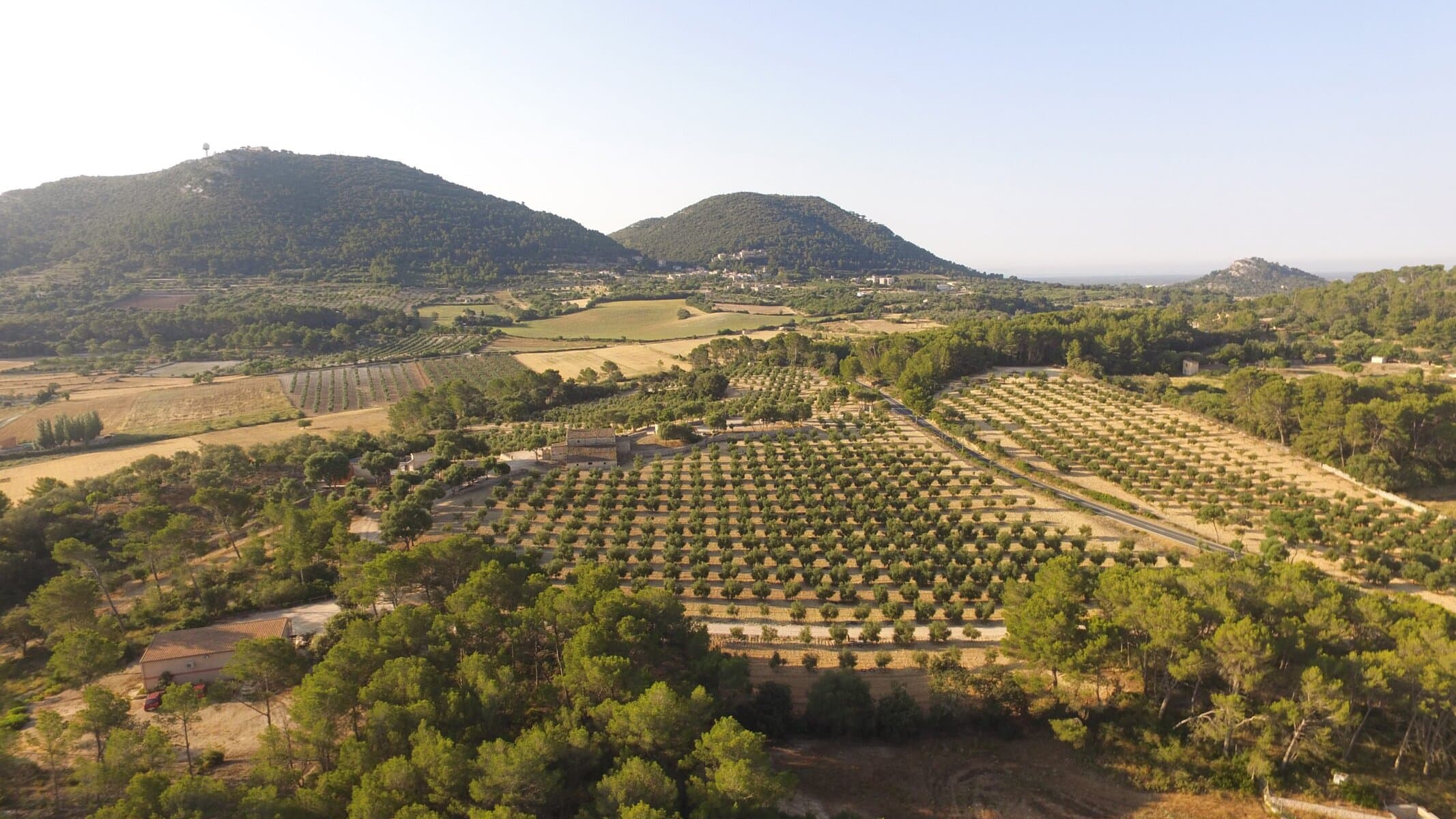
If there is one element that distinguishes Mallorcan winter gastronomy from any other time of year, it is new-harvest olive oil. Between November and January, the island’s oil mills process freshly picked olives and produce an extra virgin olive oil with an aromatic intensity that oils from the previous campaign simply cannot match.
New-harvest olive oil has a greener colour, a more pronounced peppery finish and a herbaceous freshness that recalls the olive as it hangs from the tree. It is a living product, in the best sense of the expression. Using it raw —on toast, in a broth, over a freshly served stew— is a sensory experience that Mallorcans look forward to each year with the same anticipation as the first autumn rain.
At Finca Treurer, the new-harvest Treurer extra virgin olive oil arrives each season with that intense and clean aromatic profile that has made the estate a reference for Mallorcan EVOO. A few drops over any of the seasonal dishes we describe below elevate the result to another category.
Essential seasonal dishes in winter
Mallorcan winter cuisine is a cuisine of seasonal dishes born out of necessity and turned into heritage. There are no shortcuts or fusions: there is technique accumulated over generations and respect for local produce.
Sopes mallorquines
Sopes are, probably, the most representative dish of winter gastronomy on the island. They are not a soup in the conventional sense: they are very thin slices of country bread, almost transparent, scalded with a seasonal vegetable broth —cabbage, leek, fennel, celery— and finished with a generous drizzle of extra virgin olive oil. The result is a humble and profound dish that changes character depending on the hand that prepares it.
Every family has its own version. Some add crumbled sobrasada at the end; others incorporate seasonal mushrooms. What never changes is the oil: without a good EVOO, sopes lose their soul.
Frit mallorquí
Frit is another winter classic, especially present during the pig slaughter —the matança— which is still celebrated on some inland estates. It is a sauté of pork offal (liver, lung, heart) with potatoes, dried peppers, fennel and plenty of olive oil. It is a dish of resourcefulness turned into an icon: intense, spiced and resolutely Mallorcan.
At the markets of Sineu, Inca or Santa Maria del Camí it is easy to find versions of frit during the winter months, made with local produce and served without concessions to modernity.
Escudella and Mallorcan cocido
Mallorcan escudella is the local version of the stews of the western Mediterranean: a long-simmered broth with chickpeas, cabbage, carrot, turnip, potato and various cuts of pork and chicken. It is served in two courses —first the broth with fine pasta, then the meat and vegetables— and represents winter cuisine in its most comforting expression.
Seasonal dishes like this are the most reliable thermometer of Mallorcan home cooking. You will not find them in every tourist restaurant, but you will find them in the cellers of the interior, those stone-vaulted dining rooms that in winter fill their halls with families and groups of friends.
Tumbet and garden vegetables
Tumbet —aubergines, peppers and fried potatoes layered and bathed in tomato sauce— is a dish many associate with summer, but in winter it takes on a different dimension thanks to late-season pepper varieties and recently harvested potatoes. The key to tumbet is always the oil: the frying must be done in olive oil, at a controlled temperature, so that each layer is tender inside and characterful outside.
The matança: a culinary ritual that defines the Mallorcan winter
The matança —the pig slaughter— is one of the most deep-rooted rituals of rural Mallorcan culture. Although it is practised far less frequently today than decades ago, it remains a social and gastronomic event of the first order on many inland estates.
From the matança come the cured meats that define winter gastronomy: sobrasada, botifarró, camaiot and llonganissa. Mallorcan sobrasada —with Protected Geographical Indication— is perhaps the most exported product of the island, but eating it freshly made, spread on bread with new-harvest olive oil, is an experience that no packaged version can match.
Black Mallorcan pig sobrasada deserves special mention: made from the native porc negre breed, it has a creamier texture and a more complex flavour than commercial versions. Seeking it out at producers’ markets is one of the best gastronomic plans of winter.
Winter markets: where to find the best seasonal produce
Mallorcan markets are, in winter, a living institution. Without the tourist pressure of summer, they recover their original function: supplying the local community with nearby produce. For those seeking the authentic flavours of winter gastronomy, they are the essential starting point.
- Sineu Market (Wednesday): one of the oldest and most authentic on the island, with local producers of vegetables, cheeses, cured meats and olive oil.
- Inca Market (Thursday): the largest in Mallorca, with a very complete food section and regular presence of local oil mills during the new-harvest season.
- Santa Maria del Camí Market (Sunday): specialising in wine and artisan products, with several stalls selling seasonal EVOO.
- Mercat de l’Olivar (Palma, daily): the covered market of the capital, with a fishmonger, butcher and greengrocer that faithfully reflect seasonal produce.
At these markets it is common to find new-harvest olive oil directly from producers, sometimes without a commercial label yet, sold in jugs or glass bottles. It is the most direct —and most honest— way to access the best oil of the season.
Winter recipes to bring Mallorca into your kitchen
The best way to extend the experience of Mallorcan winter gastronomy is to recreate it at home. These winter recipes do not require complex techniques: they need time, good ingredients and, above all, an extra virgin olive oil that is up to the task.
Sopes mallorquines: basic recipe
Sauté in plenty of Treurer extra virgin olive oil one onion, two garlic cloves, half a red cabbage and a bunch of chard. Add water or vegetable stock, bring to the boil and adjust the salt. Arrange very thin slices of country bread in the bottom of a clay pot, pour the hot broth over them and leave to rest for two minutes. Finish with a drizzle of new-harvest olive oil added raw: that final gesture transforms the dish.
Classic tumbet
Fry separately, in olive oil over a medium heat, slices of potato, red pepper and aubergine. Drain each batch well. In a casserole dish, alternate layers of fried vegetables with homemade tomato sauce. The secret lies in the slow frying: each vegetable should be tender, not crispy. Serve at room temperature, with a drizzle of EVOO added raw at the end.
Pairings: Mallorcan wines to accompany winter dishes
Winter gastronomy in Mallorca cannot be understood without its wines. The Binissalem and Pla i Llevant designations of origin produce native varietals —Manto Negro, Callet, Prensal Blanc— that pair naturally with the intense and rich flavours of winter cuisine.
An aged Manto Negro accompanies frit mallorquí or black Mallorcan pig sobrasada with elegance: its acidity balances the fat and its soft tannins do not compete with the spices. For sopes and escudella, a full-bodied Prensal Blanc —or even a Callet rosé— brings freshness without overshadowing the dish. The simplest and most honest pairing remains, however, a good glass of local wine and bread with new-harvest olive oil.
Winter gastronomic experiences worth seeking out
Beyond restaurants, the Mallorcan winter offers winter gastronomy experiences that connect directly with the land and its producers. These are encounters that cannot be improvised in high season because they require calm, space and availability.
- Visit to an oil mill during the harvest campaign: between November and January, some estates in the Pla de Mallorca and the Serra de Tramuntana open their facilities to show the oil extraction process. Watching freshly picked olives become EVOO in just a few hours is a lesson in gastronomy and respect for the product.
- Dinners in inland cellers: restaurants housed in old stone cellars —especially in the Raiguer region— offer seasonal menus in winter with dishes that do not appear on their summer menus.
- Hiking routes with a gastronomic stop: the Serra de Tramuntana in winter is a different setting from summer: less crowded, greener, with mist on the peaks. Many mid-mountain routes end in villages with a bar or restaurant where seasonal dishes take centre stage.
- Cured meat making workshops: some estates and cookery schools organise adapted matança workshops in January and February, where participants learn to make sobrasada and botifarró with black Mallorcan pig.
These experiences share a common thread: they put the visitor in direct contact with producers and with the real rhythms of the island. They are the perfect antidote to fast-consumption tourism and the best way to understand why Mallorcan winter gastronomy is, for many, the most authentic of the year.
Frequently asked questions
When is new-harvest olive oil available in Mallorca?
New-harvest olive oil in Mallorca is generally available from late November through January, depending on the olive variety and the time of harvest. Oil mills usually begin extraction in November with the earliest olives and continue processing until the campaign ends. It is the ideal time to buy it directly from the estate or at local markets.
What distinguishes new-harvest olive oil from conventional olive oil?
New-harvest olive oil is extracted from freshly picked olives with a low ripeness index, which gives it a higher concentration of polyphenols, more intense aromas (fresh grass, artichoke, green almond) and a more pronounced peppery bitterness. Over time, these attributes soften; that is why connoisseurs seek it out in the first months after pressing.
Where can I eat authentic seasonal dishes in Mallorca in winter?
The best places to find authentic seasonal dishes in winter are the inland cellers —especially in Inca, Consell, Binissalem and Santa Maria del Camí— and village restaurants that work with local producers. Avoid the tourist coastal areas, which in winter reduce their offering and rarely maintain a seasonal menu. Weekly markets are also an excellent source: many stalls offer tastings or sell ready-to-eat products.
What is the matança and where can it be seen in Mallorca?
The matança is the traditional pig slaughter ritual celebrated in winter, generally between December and February. Historically it was a family and community celebration in which all the year’s cured meats were made: sobrasada, botifarró, camaiot and llonganissa. Today it continues on some inland estates and at organised gastronomic events. Some cultural associations and cookery schools offer adapted workshops where participants can learn the process in a hands-on way.
Is Mallorca a good gastronomic destination in winter for independent travellers?
Absolutely. Winter is, in fact, one of the best times to explore Mallorcan winter gastronomy without the limitations of summer: restaurants have tables available, markets are more accessible and producers have time to welcome visits. The only drawback is that some establishments in tourist areas close between November and March, so it is worth directing your itinerary towards the island’s interior and towns with an active local life.